Twenty years after the original Nintendo DS revolutionized handheld gaming, the DS XL remains a beloved piece of hardware for retro enthusiasts and collectors. While the Switch dominates the modern market, there’s something special about the chunky, dual-screened giant that Nintendo released back in 2009, a device built for comfort, visibility, and one of the strongest game libraries ever assembled.
Whether you’re hunting down a DS XL to revisit childhood favorites, exploring the retro gaming scene for the first time, or just curious what all the fuss is about, this guide covers everything you need to know. From technical specs and buying tips to game recommendations and troubleshooting, we’re breaking down why the DS XL still holds up in 2026.
Key Takeaways
- The Nintendo DS XL remains a beloved retro handheld with larger 4.2-inch displays and superior ergonomics compared to the original DS, offering accessibility and comfort for extended gaming sessions.
- The DS library features over 1,800 official games across all genres, with many exclusive titles like The World Ends With You and Ghost Trick that can only be played authentically on the original hardware.
- Used Nintendo DS XL consoles are affordable in 2026 ($60–$100 for loose units, $120–$180 complete in box) with reliable second-hand markets on eBay, Mercari, and local platforms.
- Common DS XL issues like battery degradation, touch screen wear, and button stickiness are easily fixable through affordable third-party replacements and straightforward maintenance.
- The DS XL’s clamshell design and resistive touch screen provide advantages over modern handhelds for specific games, offering longer battery life (9–17 hours on low brightness) and superior stylus precision than capacitive touch alternatives.
What Is the Nintendo DS XL?
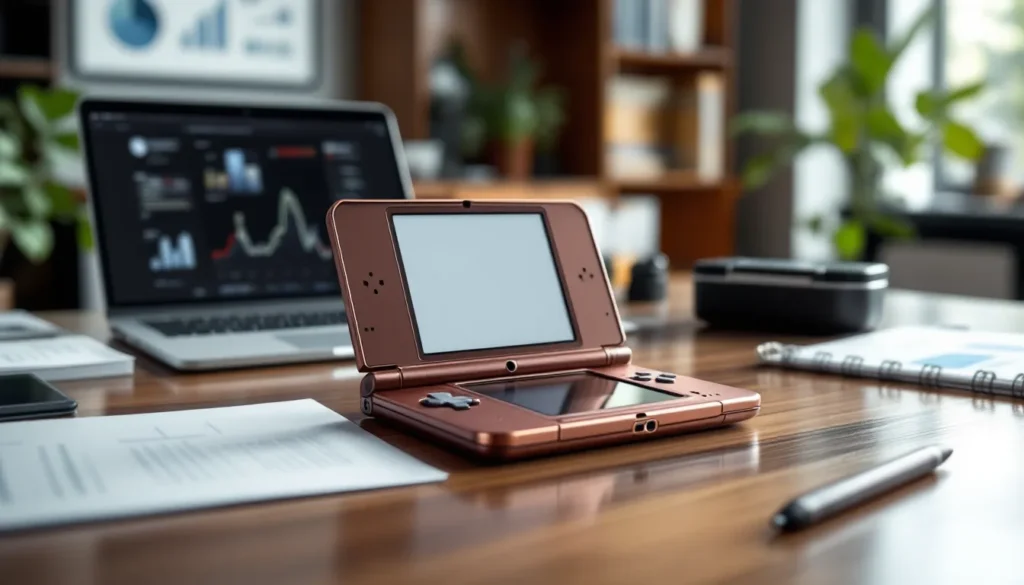
The Nintendo DS XL (known as DSi XL in some regions) is the largest model in Nintendo’s dual-screen handheld family. Released in Japan in November 2009 and worldwide in March 2010, it offered a supersized take on the standard DS hardware with screens 93% larger than the original DS.
Unlike the incremental improvements of the DS Lite, the DS XL was designed with a specific audience in mind: players who wanted bigger screens, better viewing angles, and a more comfortable grip for extended play sessions. It wasn’t about raw power, it was about accessibility and user experience.
Key Differences Between DS XL and Standard DS
The most obvious difference is screen size. The DS XL sports 4.2-inch displays (compared to the original DS’s 3-inch screens), making text sharper, sprites more visible, and touch controls easier to nail. For games heavy on reading or stylus precision, think Professor Layton, Ace Attorney, or The World Ends With You, the extra real estate makes a tangible difference.
Physically, the DS XL is noticeably bulkier. It weighs 314 grams versus the DS Lite’s 218 grams, and the footprint is larger in every dimension. But that heft comes with benefits: better ergonomics, sturdier hinge construction, and wider button spacing that feels less cramped for adult hands.
The DS XL also shipped with a wider viewing angle thanks to improved LCD panels. You could tilt the screen more without color washout, a subtle but appreciated upgrade for anyone who played in varied lighting conditions.
One quirk: the DS XL came bundled with two styluses out of the box, a standard-sized one and a larger, pen-like stylus stored in a separate slot. It’s a small touch, but it reinforced Nintendo’s focus on comfort and accessibility.
Technical Specifications and Features
Under the hood, the DS XL shares the same core specs as the DSi:
- CPU: ARM9 @ 67 MHz (main), ARM7 @ 33 MHz (co-processor)
- RAM: 16 MB
- Storage: 256 MB internal flash memory
- Screens: Dual 4.2-inch TFT LCDs (256 × 192 resolution each)
- Camera: Dual 0.3 MP cameras (one internal, one external)
- Audio: Stereo speakers, 3.5mm headphone jack
- Battery Life: 4–5 hours on high brightness, 9–17 hours on low (depending on settings and game)
- Connectivity: Local wireless, Wi-Fi (WEP/WPA support, no modern WPA2)
- Dimensions: 161mm × 91.4mm × 21.2mm (closed)
- Weight: 314 grams
The DS XL retained full backward compatibility with the massive Game Boy Advance cartridge library, though the GBA slot was primarily used for DS games that required Slot-2 accessories (like Guitar Hero: On Tour or certain Pokémon titles with dual-slot features).
It also supported DSiWare, downloadable games and apps available through the now-defunct DSi Shop. While the shop closed in 2017, DSiWare titles remain playable if previously downloaded.
Evolution of the Nintendo DS Family
Understanding where the DS XL fits requires a quick look at Nintendo’s iterative design philosophy during the mid-2000s, a period when they dominated the handheld space.
From DS to DS Lite to DS XL
The original Nintendo DS launched in November 2004 as a “third pillar” alongside the Game Boy line and GameCube. It was chunky, industrial, and frankly kind of ugly, but the dual-screen gimmick, touch controls, and built-in microphone opened up entirely new gameplay possibilities.
Two years later, the DS Lite arrived in 2006. It was sleeker, lighter, and featured brighter screens with better contrast. The redesign was a massive hit, selling over 93 million units and cementing the DS as a cultural phenomenon. But it was still small, great for portability, less ideal for extended play or older players who found the screens cramped.
Enter the DS XL in 2009. Nintendo took the DS Lite’s refined form factor and supersized it, targeting an audience that prioritized comfort over pocketability. It was never meant to replace the Lite, just offer an alternative for different preferences.
How DSi XL Fits Into the Lineup
Technically, the DS XL is based on the DSi hardware, which launched in 2008. The DSi introduced cameras, an SD card slot, the DSi Shop, and slightly upgraded internals, but it removed the GBA cartridge slot, a controversial choice that alienated some fans.
The DSi XL is simply the large-screen version of the DSi. Same cameras, same shop access, same lack of GBA support. The “XL” branding stuck in most Western markets, while Japan called it the DSi LL (“Large/Large”).
By 2011, Nintendo shifted focus to the 3DS, and DS hardware production wound down. The DS family collectively sold over 154 million units, making it the second best-selling video game console of all time (behind only the PlayStation 2).
Why the Nintendo DS XL Still Matters in 2026
In an era dominated by high-refresh OLED screens and 4K handheld gaming, why does a console with 256×192 displays still command attention? Two big reasons: nostalgia and an unmatched library.
Nostalgia and Retro Gaming Appeal
The DS XL sits in the sweet spot of retro gaming, old enough to feel nostalgic, new enough to remain accessible. For millennials and older Gen Z gamers, the DS era represents formative gaming memories: Nintendogs playdates, Brain Age commutes, midnight Pokémon trades.
Retro gaming has exploded in the past few years, with collectors driving up prices for everything from Game Boys to Dreamcasts. The DS XL benefits from this trend while remaining relatively affordable compared to rarer systems. It’s also easier to maintain than older cartridge-based systems, no corrosion, no battery saves dying (most DS games use flash memory).
The physical design holds up surprisingly well. That matte finish, the satisfying click of the hinge, the tactile stylus, there’s a charm to the DS XL’s build quality that modern devices, with their glass slabs and USB-C ports, can’t replicate.
Access to a Legendary Game Library
The DS library is one of the greatest ever assembled: over 1,800 official releases spanning every genre imaginable. RPGs, platformers, visual novels, rhythm games, brain trainers, pet sims, if it existed as a game concept in the 2000s, someone made a DS version.
Many of these titles remain exclusive to the DS family or were never properly ported. Want to play The World Ends With You as originally designed? You need a DS (the Switch version reworked the dual-screen mechanics). Same goes for Elite Beat Agents, Ghost Trick, Trauma Center, and dozens of others.
The DS was also a golden age for Japanese developers experimenting with weird, niche ideas. Atlus, Capcom, Square Enix, and smaller studios released obscure gems that never would’ve gotten greenlit on home consoles. Twenty years later, many remain hidden treasures in JRPG and visual novel communities.
Best Nintendo DS XL Games Worth Playing Today
With nearly two decades of releases, narrowing down the best DS games is tough. Here’s a curated list focused on titles that hold up in 2026, either through timeless design, unique mechanics, or sheer replay value.
Essential RPGs and Adventure Titles
The DS was an RPG powerhouse. These are must-plays:
- Pokémon HeartGold/SoulSilver – The definitive Pokémon experience. Two regions, walking Pokémon, the Pokéwalker accessory, and meticulous remastering of Gen 2. Still the gold standard.
- Dragon Quest IX: Sentinels of the Starry Skies – A 100+ hour JRPG with deep customization, multiplayer quests, and post-game content for days.
- The World Ends With You – Shibuya-flavored action RPG with dual-screen combat that’s never been replicated. Soundtrack still slaps.
- Chrono Trigger DS – The SNES classic with extra dungeons, anime cutscenes, and dual-screen map management. Best version of a best-ever game.
- Radiant Historia – Time-travel tactical RPG with branching timelines and one of the most satisfying battle systems on the platform.
- Professor Layton Series – All six mainline entries are worth playing. Brain-teasing puzzles wrapped in charming European mystery plots.
Top Puzzle and Casual Games
The DS excelled at pick-up-and-play experiences:
- Picross 3D – Spatial puzzle game that’s meditative, challenging, and endlessly replayable.
- Tetris DS – Still one of the best Tetris versions ever made. Six modes, Nintendo-themed skins, and rock-solid mechanics.
- Professor Layton and the Curious Village – Yes, it’s also an adventure game, but the puzzle design is what shines.
- Puzzle Quest: Challenge of the Warlords – Match-3 meets RPG. Addictive then, addictive now.
- Clubhouse Games – 42 classic games (chess, poker, darts, etc.) with online play. Great value.
Hidden Gems You Might Have Missed
Deep cuts that deserve more love:
- Ghost Trick: Phantom Detective – From the Ace Attorney creator. Time-manipulation puzzles, a killer story, and unforgettable characters. (A remaster hit Switch/PC in 2023, but the DS version has its own charm.)
- Infinite Space – Space opera RPG with ship customization and tactical fleet combat. Niche, but brilliant if you’re into sci-fi.
- Contact – Bizarre meta-RPG where you control a kid who’s controlled by you (the player). Weird, experimental, polarizing.
- Elite Beat Agents – Rhythm game starring government cheerleaders who solve crises with the power of music. Peak DS absurdity.
- 999: Nine Hours, Nine Persons, Nine Doors – Visual novel/escape room hybrid that launched the Zero Escape series. Mind-bending narrative that uses the DS hardware in clever ways.
- Might & Magic: Clash of Heroes – Puzzle-RPG with strategic depth that punches way above its weight class.
Buying a Nintendo DS XL in 2026: What You Need to Know
Hunting for a DS XL in 2026 means navigating the secondhand market. Here’s how to do it smart.
Where to Find DS XL Consoles
Your main options:
- eBay – Largest selection, but prices vary wildly. Use filters for condition (refurbished, used, for parts) and watch for auctions vs. Buy It Now listings.
- Mercari/Poshmark – Often cheaper than eBay, especially for lots (console + games). Negotiation is common.
- Facebook Marketplace/Craigslist – Local pickup avoids shipping costs and lets you inspect before buying. Prices can be steals or wildly inflated, research first.
- Retro Game Stores – DKOldies, GameStop (occasionally), or local shops. Expect premium pricing but better quality control and return policies.
- Japan Import Sites (Sendico, FromJapan, Buyee) – Japanese DSi LL units are often cheaper and better maintained. Region-free for games, but menus are in Japanese (not a big deal once you know the layout).
Pricing and Value Expectations
As of early 2026, here’s the pricing landscape:
- Loose console (no box/accessories): $60–$100 USD
- Complete in box (CIB): $120–$180 USD
- Special editions (bronze, burgundy, etc.): $150–$250+ USD
- Japanese DSi LL units: ¥5,000–¥8,000 (~$35–$55 USD) plus shipping
Condition matters more than color. A scratched, yellowed unit with hinge cracks isn’t worth $80, even if it powers on. Conversely, a well-maintained bronze DS XL in original packaging can command collector premiums.
Games are generally affordable. Most common titles ($5–$15), popular RPGs ($20–$40), rare stuff like Solatorobo or Radiant Historia ($50–$150+). Check PriceCharting.com for current market values.
What to Check When Buying Used
Before pulling the trigger, verify:
- Hinge integrity – The DS XL hinge is sturdier than the Lite, but cracks still happen. Gently open/close and listen for cracking sounds. Avoid units with visible cracks near the hinge mounts.
- Screen condition – Check both screens for dead pixels, discoloration, or deep scratches. Light scratches on the touch screen are normal (it’s resistive touch), but deep gouges affect usability.
- Touch screen responsiveness – Use the system settings to test all corners. A dead zone in the touch screen is a dealbreaker.
- Button functionality – Test every button (D-pad, ABXY, L/R triggers, Start/Select, Power). Sticky or unresponsive buttons can often be fixed, but factor repair time into value.
- Battery health – Ask the seller about battery life. Original batteries from 2009–2011 are often degraded. Replacements are cheap (~$10–$15), but it’s a point for negotiation.
- Charging port – Wiggle the charger (gently.) to ensure a solid connection. Loose ports are annoying and can worsen over time.
- SD card slot (if applicable) – If you care about DSiWare, test the SD slot. Many sellers don’t.
- Region – DS games are region-free, but DSiWare is region-locked. If you want to download DSiWare (via pre-existing downloads or homebrew), region matters.
Ask for pictures of the serial number and any damage. Reputable sellers won’t balk at extra photos.
Maintaining and Troubleshooting Your DS XL
The DS XL is built like a tank, but 15+ years of use takes a toll. Here’s how to keep it running and fix common issues.
Common Hardware Issues and Fixes
Problem: Battery drains quickly or won’t hold charge
Original batteries degrade over time. Replacing the battery is straightforward: remove the back cover screws (triwing screwdriver needed), disconnect the old battery, and swap in a new one. Third-party batteries (Cameron Sino, Insten) work fine and cost $10–$15. Expect 4–6 hours on a fresh battery.
Problem: Touch screen not responding or inaccurate
First, recalibrate: go to System Settings > Touch Screen > Calibrate. If that doesn’t fix it, the digitizer might be worn. Replacement digitizers are available on iFixit or eBay for $15–$25, but installation requires disassembly and patience. Alternatively, use a glass screen protector, sometimes the extra layer improves touch accuracy.
Problem: L or R button not working
Dirt and grime under the shoulder buttons are the usual culprits. Disassemble the console (YouTube tutorials exist), clean the rubber contacts and PCB pads with isopropyl alcohol, reassemble. If the rubber membrane is torn, replacements are cheap (~$5).
Problem: Hinge cracked or loose
Minor cracks can be reinforced with thin epoxy or cyanoacrylate glue applied carefully. Major breaks require replacement shells (~$20–$30 for full housing kits). Shell swaps are advanced DIY projects, expect 1–2 hours and some frustration.
Problem: Won’t power on
Check the battery connection, try a different charger, and inspect the fuse (F1 and F2 on the motherboard). If the fuse is blown, replacement requires soldering skills.
Cleaning and Care Tips
Keep your DS XL in fighting shape:
- Exterior: Wipe down with a microfiber cloth slightly dampened with water or screen cleaner. Avoid harsh chemicals that can damage the matte finish.
- Screens: Use a soft microfiber cloth. For stubborn smudges, slightly dampen the cloth. Never spray liquid directly onto the screens.
- Stylus slot and cartridge slot: Compressed air blasts out dust and lint. Don’t insert anything metal to “clean” the contacts, you’ll do more harm than good.
- Speakers and vents: Gently brush with a soft-bristled toothbrush to dislodge debris.
- Buttons: If buttons feel sticky, remove the back cover and clean with isopropyl alcohol (90%+ concentration) on a cotton swab.
Store the DS XL in a protective case when not in use. Even if you’re not carrying it around, cases prevent dust buildup and accidental drops.
Battery Replacement and Upgrades
Stock DS XL batteries are 1050 mAh. Some third-party options advertise higher capacities (1200–1500 mAh), but real-world gains are marginal, most “high-capacity” batteries are mislabeled or negligibly better.
Stick with reputable brands (Cameron Sino is solid) and avoid ultra-cheap no-name batteries from AliExpress. A bad battery can swell, leak, or even damage the console.
If you’re modding the console, you can install a USB-C charging mod. Kits exist (search Etsy or retro modding forums), but they require soldering and shell modification. Only attempt if you’re comfortable with electronics DIY.
DS XL vs. Modern Handhelds: How Does It Compare?
How does a 2009 handheld stack up against 2026 hardware? Depends on what you value.
DS XL vs. Nintendo Switch
The Switch is objectively more powerful, versatile, and supported. 1080p docked, 720p handheld, modern indie and AAA libraries, online functionality, and regular firmware updates.
But the DS XL has advantages:
- Portability: The Switch Lite weighs 275g: the DS XL is 314g, but the clamshell design protects screens without a case. You can toss a DS XL in a bag without worry.
- Battery life: On low brightness, the DS XL outlasts the Switch (9–17 hours vs. 4.5–9 hours).
- Touch precision: Resistive touch (DS XL) is more accurate for stylus input than capacitive touch (Switch). Games like Brain Age or Picross feel better on DS hardware.
- Dual screens: Some DS games can’t be properly ported because the dual-screen design was integral to gameplay (e.g., The World Ends With You, Hotel Dusk).
- Price: A used DS XL costs $60–$100. A new Switch Lite is $199: a standard Switch is $299+. For budget retro gaming, the DS XL wins.
The Switch is the better all-around device. But if you want to experience DS-era classics as intended, the DS XL is irreplaceable.
DS XL vs. Steam Deck and Other Portable Devices
The Steam Deck, ROG Ally, and similar PC handhelds are in a completely different weight class. They’re 600g+ powerhouses running full Windows or Linux, playing AAA PC games at medium-to-high settings.
Comparing them to a DS XL is like comparing a sports car to a bicycle, they serve different purposes.
That said, many gamers interested in portable retro gaming collections often consider modern mobile gaming devices for emulation purposes. The DS XL offers native hardware compatibility, no emulation quirks, and authentic tactile feedback. Emulators like DeSmuME or melonDS are excellent, but they don’t perfectly replicate the feel of stylus-on-resistive-screen interaction or the physical hinge snap.
For pure nostalgia and authenticity, original hardware wins. For versatility and power, modern handhelds dominate.
Enhancing Your DS XL Experience
A stock DS XL is great, but a few accessories and mods can elevate the experience.
Best Accessories and Add-Ons
Screen Protectors
A tempered glass protector for the top screen and a film protector for the touch screen keep both displays scratch-free. Hori and iLLumiShield make DS XL-specific kits.
Carrying Cases
Hard-shell cases (Butterfox, AmazonBasics) protect against drops and hold extra cartridges. Soft pouches (Hori, PowerA) are slimmer but offer less protection.
Replacement Styluses
OEM Nintendo styluses are ideal but pricey. Third-party packs (10+ styluses for $10) are fine as backups. Some players prefer the larger pen-style stylus for extended play.
Flashcarts (R4, EZ-Flash, etc.)
Flashcarts let you load game ROMs onto a microSD card and play them on original hardware. Legality is murky, owning ROMs of games you don’t own is piracy, but flashcarts are legal to own in most regions.
Popular options: R4i Gold, Ace3DS X, EZ-Flash Parallel. Prices range from $15–$40. Be cautious buying from sketchy sites: stick to known sellers (nds-card.com, though verify current reputability).
External Battery Packs
A portable USB battery pack with a DS-compatible charging cable extends play sessions on the go. Anker and RAVPower offer reliable options.
Homebrew and Customization Options
The DS homebrew scene is still active in 2026, and resources from communities remain helpful for enthusiasts.
TWiLight Menu++
A homebrew launcher that runs DS/DSi games and homebrew apps from an SD card without needing a flashcart (on DSi/DSi XL models). Requires softmodding via Memory Pit or Flipnote exploit.
Custom Themes
TWiLight Menu++ supports custom UI themes. The community has created hundreds, from retro Nintendo aesthetics to modern minimalism.
Homebrew Games and Apps
Notable projects include:
- DSCraft – Minecraft clone for DS. Surprisingly functional.
- Pixel Paint – Drawing app with layers and export options.
- DSOrganize – PDA suite (calendar, notes, file browser).
- LameCraft – Another Minecraft-style builder.
Shell Swaps
Custom replacement shells (clear, transparent colored, retro Game Boy-themed) are available from Etsy and AliExpress. Installation requires disassembly and patience, but the results can be stunning.
Region-Free Mods
DS games are already region-free, but DSiWare is not. Homebrew CFW bypasses DSi region locks, letting you run any region’s DSiWare.
Backlight Mods
Unlike the Game Boy, the DS XL already has backlit screens. But, some modders experiment with LED brightness tweaks for better battery life or visibility. These are niche and not widely documented.
Conclusion
The Nintendo DS XL isn’t just a relic, it’s a gateway to one of gaming’s richest libraries and a reminder of an era when Nintendo took wild creative swings on handheld hardware. In 2026, it’s more accessible than ever, with affordable prices, active communities, and a wealth of mods and homebrew to extend its lifespan.
Whether you’re revisiting childhood classics, exploring JRPGs you missed the first time, or just want a break from hyper-connected modern gaming, the DS XL delivers. It’s a device that prioritized comfort, accessibility, and fun over cutting-edge specs, a philosophy that still resonates.
Grab one while they’re still plentiful, stock up on games, and rediscover why the DS family sold 154 million units. The screens might be low-res, but the experiences are timeless.