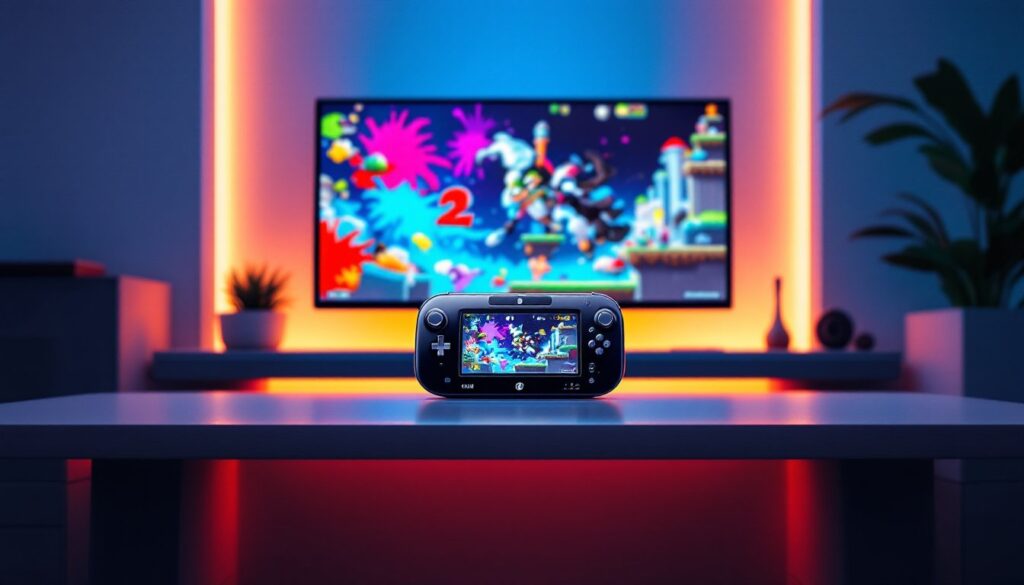
The Wii U might’ve been Nintendo‘s commercial stumble, but its library tells a different story. Released in 2012, the console spent six years building a catalog of genuinely brilliant games that deserve way more attention than they got. Sure, the Switch has overshadowed the Wii U completely, but that doesn’t mean the games have aged poorly or lost their charm. Revisiting the Wii U’s best offerings reveals why certain titles still hold up as some of Nintendo’s finest work, particularly when it comes to exclusive franchises and experimental game design that took full advantage of the GamePad’s unique features.
Key Takeaways
- The best Wii U games like Splatoon, Bayonetta 2, and The Legend of Zelda: Breath of the Wild remain critically acclaimed and technically sound despite the console’s commercial underperformance.
- Wii U exclusive games such as Donkey Kong Country: Tropical Freeze and Super Mario 3D World showcase innovative platforming design and level pacing that rival Nintendo’s most celebrated titles.
- The Wii U’s GamePad enabled unique multiplayer and control innovations, from stylus-based gameplay in Kirby and the Rainbow Curse to asymmetrical experiences in Nintendo Land.
- Backwards compatibility with original Wii games significantly extended the Wii U’s value proposition and library depth for families already invested in Nintendo’s ecosystem.
- The console’s strongest games prove Nintendo’s experimental design philosophy of the 2010s produced timeless experiences worthy of rediscovery, even as newer ports overshadow the originals.
Why The Wii U Deserves A Second Look
The Wii U got buried under a tidal wave of negative press about its marketing, confusing hardware naming, and flagging third-party support. But strip away the business failures, and you’re left with a console that hosted some genuinely innovative first-party games. Nintendo used the Wii U to experiment with asymmetrical gameplay, off-TV play, and creative control schemes in ways that felt fresh even at the time.
The Wii U’s exclusive game library contains titles that defined Nintendo’s approach in the 2010s. When you talk about wii u exclusive games, you’re discussing experiences that simply didn’t exist anywhere else. Games like Splatoon launched exclusively on Wii U before becoming a multi-platform powerhouse on Switch, but the original still stands as the console’s crown jewel. According to gaming media coverage, the Wii U’s strongest period came in its final years, when Nintendo stopped chasing casual audiences and focused on creating bold, genre-defining titles.
What many overlooked at the time, and what some still overlook, is how well the Wii U’s wii u backwards compatibility feature extended the value proposition. The ability to play original Wii games meant your library wasn’t limited to just what the Wii U itself offered. That backwards compatibility became crucial for justifying the purchase, especially for families who already owned Wii software. Combined with the wii u library’s growing collection of exclusives, the system offered serious depth if you were willing to dig.
Action And Adventure Standouts
Epic Experiences That Define The Console
Splatoon isn’t just the best Wii U action game, it’s arguably the best reason to own the console. Nintendo took the ink-based shooter concept and created something that felt completely fresh. Rather than chasing Call of Duty’s formula, Splatoon made territory control the core mechanic, rewarding map awareness and team coordination over raw aim. The ranked modes demanded strategy: turf war felt immediately accessible. Online play was smooth (minus the infamous lack of voice chat, which was pure Nintendo stubbornness), and the weapon variety meant different playstyles actually worked.
Bayonetta 2 showcases why action game enthusiasts still respect the Wii U. This is a genre-defining character action game with combat depth that rewards mastery. The dodge-offset mechanic created windows of opportunity that demanded precision timing, and boss design was immaculate. The fact that this stayed exclusive to Wii U (and later Switch) is criminal. If you’ve played contemporary action games and felt they lacked visceral impact or combat sophistication, Bayonetta 2 will remind you why tight, responsive combat design matters. The game runs beautifully on Wii U, hitting 60 FPS during gameplay, which was crucial for a game demanding split-second inputs.
The Legend of Zelda: Breath of the Wild technically launched on both Wii U and Switch, but the Wii U version deserves credit for proving the vision worked. Yes, the Switch version runs smoother and looked better, but conceptually, Breath of the Wild on Wii U proved Nintendo’s design philosophy was sound. Environmental puzzle solving, emergent gameplay, and total player freedom, the Wii U delivered this completely. Many gaming sources rank this as the console’s pinnacle moment, even if it became more famous on Switch.
Platformers That Showcase Innovation
Precision And Creativity Combined
Donkey Kong Country: Tropical Freeze represents everything right about Wii U platforming. Retro Studios nailed the balance between difficulty and fairness. Mine cart sections hit hard but never felt unfair. The game demanded pattern recognition and timing, but never punished you for legitimate mistakes. Playing as different Kongs with their own movement properties added replay value and strategic depth. Cranky Kong’s pogo ability alone changed how you approached certain levels, encouraging experimentation.
Super Mario 3D World proved that 3D Mario could work in a tighter, more structured package than Super Mario 64 or Sunshine. The camera stayed fixed, the levels were compact, and the focus landed squarely on precision platforming. Multiplayer co-op introduced chaos in the best way, building a grappling hook from four plumbers taught you patience real quick. This game didn’t get the recognition it deserved until Switch brought it back, but Wii U owners knew: 3D World was special. The level design escalates methodically, with new mechanics introduced and immediately put to the test before moving on.
Kirby and the Rainbow Curse used the GamePad stylus in ways most games forgot to try. Drawing lines to guide Kirby created a control scheme that felt unique, sometimes clunky, but eventually rewarding once muscle memory kicked in. Visually, the game’s yarn-inspired aesthetic was gorgeous, bright, colorful, and charming. It’s not a platformer in the traditional sense, but it demands the same precision and rhythm that made the great platformers work. The game pushed what the GamePad could actually do, moving beyond gimmick into legitimate design innovation.
Multiplayer Games Worth Revisiting
Mario Kart 8 landed on Wii U before Nintendo ported it to Switch, and the original still holds up. The track design was exceptional, creative enough to stay interesting across multiple seasons, technical enough that competitive racing actually required optimization. Drifting felt responsive. Item balancing never made you feel completely hosed if you ate a Blue Shell in first place. The battle modes (even if they shared main tracks) created memorable social moments. Local multiplayer delivered the chaos everyone wanted, and online ranked let you chase better ratings.
Splatoon’s multiplayer ranked seasons, while less robust than what came later on Switch, created a competitive scene that proved the concept worked. Climbing from B-rank to S-rank demanded mechanical skill and map knowledge. The weapon meta shifted with updates, keeping the game fresh. While the Wii U version lacked the depth of Splatoon 2 and 3, it established the formula that made those games successful.
Nintendo Land got unfairly dismissed as a Wii Sports sequel. It wasn’t, it was a Nintendo IP theme park where each minigame explored GamePad integration differently. Zelda: Battle Quest turned the Wii U’s unique controller into a legitimate multiplayer experience. Donkey Kong’s Crash Course had players memorizing layouts like a speedrunner. Not all 12 games landed equally, but the best ones showed creative potential the industry mostly ignored. Various gaming guides mention these titles when discussing hidden Wii U gems, even if they didn’t light the sales charts on fire.
The Wii U’s multiplayer library also housed Affordable Space Adventures and Snipperclips-adjacent titles that made local couch gaming relevant again, something people craved before the Switch brought handheld gaming back to living rooms.
Conclusion
The Wii U’s game library represents Nintendo’s most experimental period of the past two decades. Yes, many of these titles got rereleased on Switch, but the originals hold their own, sometimes outshining the ports through technical performance or creative use of the GamePad. If you can track down a Wii U and build a collection around titles like Splatoon, Bayonetta 2, and 3D World, you’re getting access to some of Nintendo’s most underrated work. The console’s legacy isn’t about sales numbers: it’s about games that mattered then and still matter now. Don’t sleep on the Wii U’s catalog just because the hardware didn’t dominate. These games did.