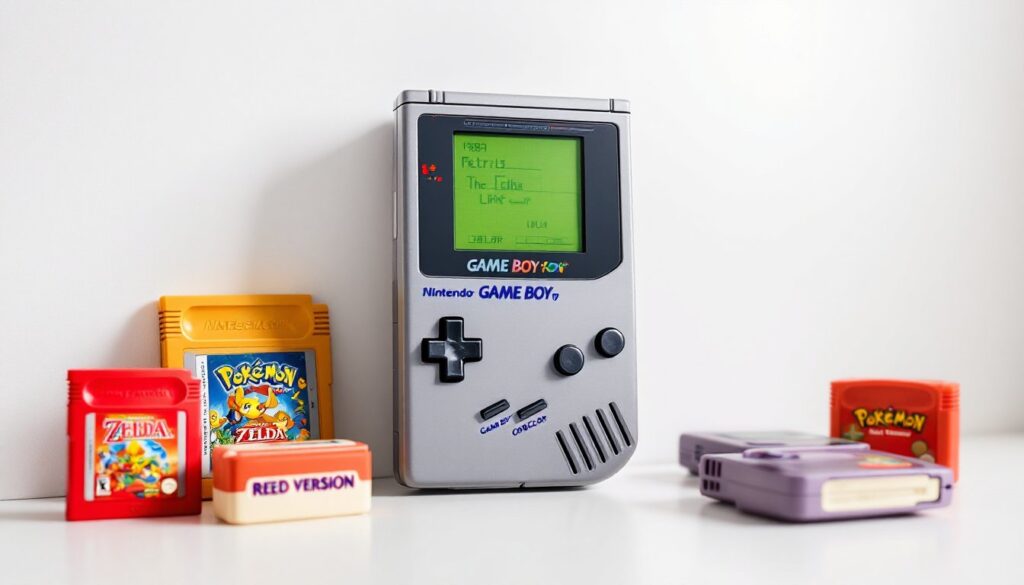
When you mention the Game Boy Nintendo, most gamers instantly picture that chunky gray brick with the monochrome green screen. Released in 1989, it wasn’t the most powerful handheld on the market, but it absolutely dominated. The Game Boy Nintendo became more than a gaming device: it was a cultural phenomenon that proved gameplay and battery life could beat flashy specs every single time. Nearly four decades later, the Game Boy Nintendo remains one of the most collectible and celebrated portables ever made. Whether you’re a casual player curious about gaming history or a serious collector hunting for rare cartridges, understanding the Game Boy Nintendo legacy matters.
Key Takeaways
- The Game Boy Nintendo dominated handheld gaming since 1989 by prioritizing gameplay, durability, and battery life over raw processing power, proving that smart design beats flashy specs.
- Game Boy’s pairing with Tetris as the system seller drove adoption to over 4 million units worldwide by 1990 and remains a masterclass in strategic software bundling.
- Three distinct Game Boy models—the original brick, the Pocket, and the Color—each evolved the handheld gaming experience while maintaining the core identity that made the Game Boy iconic.
- Essential Game Boy Nintendo titles like Pokémon Red and Blue, The Legend of Zelda: Link’s Awakening, and Super Mario Land defined portable gaming and remain highly collectible today.
- Modern preservation efforts, including hardware restoration with IPS backlight mods and official access through Nintendo Switch Online, keep the Game Boy Nintendo legacy alive for future generations.
- The Game Boy Nintendo’s legacy proves that innovation in game design and user experience transcends hardware limitations, cementing its influence on the entire handheld gaming industry.
The History and Evolution of Game Boy
From 1989 to Modern Day: How Game Boy Became a Legend
Nintendo didn’t invent portable gaming, but they perfected it. The original Game Boy launched in April 1989 in Japan and July 1989 in North America, courtesy of Nintendo’s R&D team led by Gunpei Yokoi. The hardware specs were modest by contemporary standards, a 4.7-inch monochrome LCD screen, an 8-bit CPU, and a battery life measured in hours (when competitors like the Atari Lynx lasted minutes). What mattered was execution: durability, affordability, and Tetris.
Nintendo Handheld: The Complete details how the system’s pairing with Tetris became a legendary move in gaming history. The tile-matching puzzle game shipped with the hardware in most markets and became the “system seller” that drove adoption through the roof. By 1990, Game Boy had sold over 4 million units worldwide.
The Game Boy line didn’t stop evolving. The Game Boy Pocket arrived in 1996, slimming down the design and introducing a sharper monochrome screen. Then came the Game Boy Color in 1998, finally bringing color gaming to Nintendo’s handheld line. Each iteration kept the core identity intact: simple, tough, and absolutely loaded with games that defined portable gaming. Interesting Facts You Probably Didn’t Know About Nintendo reveals how Nintendo’s strategic focus on software libraries cemented the Game Boy’s reign against technically superior competitors.
Game Boy Models and Specifications
Classic, Pocket, and Color: Breaking Down Each Generation
The original Game Boy (1989) featured a 4.7-inch monochrome LCD, 4MHz processor, and weighed about 6 ounces with batteries. Its 10-hour battery life crushed competitors. The brick-like form factor became iconic, and the deep gray plastic was practically indestructible.
The Game Boy Pocket (1996) cut size and weight roughly in half while keeping the monochrome screen. Battery life stayed solid at around 10 hours, though with smaller AA batteries. It was the “travel edition”, pocketable in ways the original wasn’t, even though the name of the original implying otherwise.
The Game Boy Color (1998) was the real leap forward. A 3.2-inch color LCD screen, 8MB of RAM, and backward compatibility with original Game Boy cartridges. Battery life dropped to 15-20 hours (still exceptional), and the system weighed about 5 ounces. It supported roughly 180 games in full color, with hundreds more in monochrome mode.
Nintendo DS Release Date: emerged as Game Boy’s spiritual successor in 2004. But, the original Game Boy line’s specifications proved timeless, many original units still function flawlessly today, a testament to their engineering.
Essential Game Boy Games Every Collector Should Own
The Game Boy Nintendo library contains some of gaming‘s most influential titles. Tetris remains the system’s crown jewel, addictive, elegant, and instantly approachable to any player.
The Legend of Zelda: Link’s Awakening (1993) proved that RPG depth was possible on the humble handheld. It still holds up today. Pokémon Red and Blue (1996) launched a multimedia empire and made the Game Boy a must-have device for millions of kids worldwide. The turn-based battles and creature-collecting loop were perfectly suited to portable gaming.
Super Mario Land and Super Mario Land 2: 6 Golden Coins defined platforming on the system. Metroid II: Return of Samus delivered exploration and atmosphere even though the technical constraints.
For Game Boy Color owners, Pokémon Gold and Silver represented a massive leap in scope. The Legend of Zelda: Oracle of Seasons and Oracle of Ages proved that color could enhance adventure gameplay without sacrificing substance.
Collectors should also hunt for Kirby’s Dream Land, Wario Land series entries, Final Fantasy Legend games, and Dragon Warrior Monsters. Nintendo DS XL: The highlights how handheld gaming evolved after Game Boy, but the originals remain irreplaceable.
Game Boy Emulation and Preservation in 2026
Game Boy preservation has become a serious hobby. Hardware enthusiasts restore original units, replace worn screens with modern LCD alternatives (like the Hispeedido IPS backlight mod), and replace capacitors to prevent battery leakage damage. These restoration projects keep Game Boy Nintendo systems alive for future gamers.
Emulation remains another layer of preservation. Emulators like BGB and Gambatte accurately replicate Game Boy hardware on modern systems. Feature: The Game Boy explores how preservation efforts keep the Game Boy’s legacy accessible.
In 2026, the Nintendo Switch and Nintendo Switch 2 have introduced Game Boy titles through Nintendo Switch Online, making official access easier than ever. But, original hardware collectors still pursue authentic cartridges, unmodified originals command premium prices, especially for first printings of Pokémon and Zelda games.
ROM archiving, cartridge scanning projects, and fan-made restoration guides ensure Game Boy Nintendo knowledge survives intact. The community actively discusses best practices for battery replacement, screen repair, and authentic restoration techniques.
Conclusion
The Game Boy Nintendo remains a cornerstone of gaming history. From its 1989 launch through today, it proved that innovation in game design and user experience matters more than raw horsepower. Collectors, speedrunners, and casual gamers continue to celebrate the system’s library and durability. Whether you’re hunting cartridges, restoring hardware, or discovering classics through emulation, the Game Boy Nintendo’s influence on portable gaming is undeniable and timeless.