
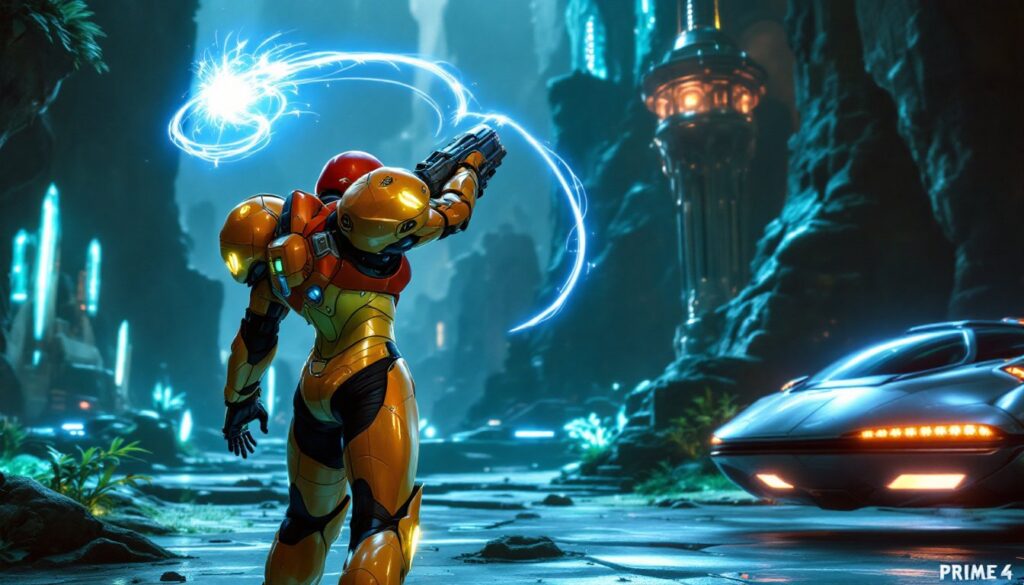
Metroid Prime 4: Beyond finally has a release date, and the gaming community is buzzing. After nearly 18 years since Metroid Prime 3: Corruption arrived on the Wii, Retro Studios is bringing Samus Aran back to the first-person action-adventure format that made the Prime subseries legendary. Announced in 2017 and fully revealed in June 2024, this Nintendo Switch and Switch 2 exclusive represents one of the most anticipated releases in the franchise’s history. Whether you’re a longtime Metroid fan or new to the series, here’s what you need to know about this major continuation of the Prime saga.
Key Takeaways
- Metroid Prime 4: Beyond launched on December 4, 2025, as a Nintendo Switch and Switch 2 exclusive, marking the franchise’s return after nearly 18 years since Metroid Prime 3: Corruption.
- The game introduces psychic abilities that allow Samus to telekinetically control shots mid-flight and manipulate environmental objects, adding fresh combat and puzzle-solving mechanics to the classic first-person formula.
- The Vi-O-La vehicle serves as both a fast-travel tool and hub-world connector, reducing downtime while maintaining the methodical exploration fans expect from Metroid Prime games.
- Metroid Prime 4: Beyond continues the story directly after Metroid Prime 3, transporting Samus to the planet Viewros where she must survive, explore, and interact with the Lamorn species.
- The Switch 2 version features enhanced graphics, higher polygon counts, refined textures, and improved frame rates compared to the base Switch version, though both deliver the same content and story.
- Metroid Prime 4 respects the legacy of first-person exploration and scanning mechanics while innovating with new systems that differentiate it from previous Prime trilogy entries.
What Is Metroid Prime 4 and Why Fans Are Excited
Metroid Prime 4: Beyond is the fourth main entry in the Metroid Prime subseries and the tenth mainline Metroid title overall. Developed by Retro Studios, the team that crafted the original Metroid Prime trilogy, this first-person action-adventure picks up directly after Metroid Prime 3: Corruption’s story, continuing Samus’s journey in the Prime universe.
The long development cycle has fueled massive anticipation. Fans have waited nearly two decades for a new Prime experience, making this release one of the most talked-about Nintendo projects in recent memory. The announcement of Retro Studios’ return to the helm also reignited confidence among players who felt the franchise’s absence keenly. New mechanics like psychic abilities and the introduction of a hub world with vehicle traversal add fresh layers to the classic first-person Metroidvania formula, promising both familiar and innovative gameplay elements.
Release Date and Platform Availability
Metroid Prime 4: Beyond launches on December 4, 2025, worldwide. The game will be available on both the Nintendo Switch and the upcoming Nintendo Switch 2, with platform-specific optimizations for each system.
Switch versions differ notably: the original Switch edition delivers the full experience on the standard hardware, while the Switch 2 version features enhanced visuals and improved frame rate. Both versions ship on cartridge with file sizes of approximately 28.9 GB (Switch) and 31.6 GB (Switch 2). This dual-platform strategy ensures accessibility while rewarding players who upgrade to Nintendo’s next-generation hardware. Pre-orders are available through the Nintendo eShop and major retailers.
Gameplay and Combat Innovations
At its core, Metroid Prime 4 maintains the DNA that defined the original Prime: first-person exploration, environmental scanning, non-linear progression, and ability-gated advancement. But, Retro Studios has introduced significant new systems that expand the formula.
Psychic Abilities are the headline mechanic. Instead of just firing beams, Samus can now telekinetically control her shots mid-flight, manipulate environmental objects, and solve puzzles in ways the earlier Prime games couldn’t help. This opens up creative combat and exploration possibilities.
The Vi-O-La, a technologically advanced bike, serves as both a traversal tool and a hub-world connector. Rather than walking across expansive areas, players ride this vehicle between major zones, reducing downtime while maintaining exploration integrity. Joy-Con controls are supported on Switch, and the Switch 2 version introduces refined “mouse-style” aiming via Joy-Con 2, offering more precise first-person targeting for players who prefer direct control over motion gestures.
Story and World Exploration
Metroid Prime 4: Beyond takes Samus to Viewros, an undiscovered planet formerly inhabited by an ancient civilization. The setup is classic Metroid: after a confrontation with her rival Sylux, Samus is transported to this alien world and must survive, explore its mysteries, interact with the indigenous Lamorn species, and uncover a way home.
The narrative acts as a direct sequel to Metroid Prime 3: Corruption, tying loose threads from that entry while pushing the Prime timeline forward. The world design follows the Metroidvania tradition with interconnected areas, environmental storytelling via scanning, and ability-locked passages that encourage backtracking and discovery. The hub-world structure with Vi-O-La traversal freshens the formula while preserving the methodical, puzzle-focused exploration fans expect. Expect environmental hazards, alien civilizations with their own agendas, and the environmental lore scanning that’s been core to Prime since day one.
Graphics and Technical Performance
The Switch 2 version of Metroid Prime 4: Beyond showcases notable graphical improvements over the original Switch release. Higher polygon counts, refined textures, enhanced lighting, and more detailed environments take advantage of the stronger hardware. Frame rate performance also scales appropriately: expect smoother, more responsive gameplay on Switch 2 compared to the base Switch version, crucial for a first-person action game where input lag matters.
The original Switch version remains fully playable and feature-complete, but runs at lower resolution and frame rate to fit the hardware. Both versions deliver the same content and story, ensuring no gameplay fragmentation. Technical reviews from outlets like IGN will provide detailed performance breakdowns closer to launch, but the dual-version approach gives players choice without forcing a hardware upgrade to enjoy the full experience.
How It Compares to Previous Metroid Games
Compared to Metroid Prime, Metroid Prime Remastered, and Metroid Prime 2: Echoes, Metroid Prime 4: Beyond retains core design principles while expanding the systems palette. The first-person perspective, scanning mechanics, and ability-progression structure remain intact, this is unmistakably a Prime game.
But, psychic abilities and the hub-world vehicle system represent departures from Metroid Prime 1-3. Those entries locked you into linear combat corridors: Prime 4 encourages dynamic object manipulation and telekinetic puzzle-solving. The Vi-O-La isn’t a replacement for on-foot exploration, it’s a fast-travel and narrative tool that speeds traversal between major zones.
Compared to 2D Metroid titles like Metroid Dread, Prime 4 shares the same gated-progression DNA and ability-driven exploration structure, but executes it in 3D first-person space. Metroid Dread emphasizes tight 2D combat and platforming within confined corridors: Prime 4 prioritizes environmental exploration and scanning alongside combat. Both are Metroidvania experiences, just fundamentally different in perspective and pacing. Nintendo Life has extensive coverage comparing the different Metroid eras if you want deeper context.
Conclusion
Metroid Prime 4: Beyond represents a measured evolution of a beloved franchise. It respects what made Metroid Prime 1-3 iconic, first-person exploration, scanning, ability gating, while introducing mechanics like psychic powers and vehicle traversal that refresh the formula. Launching December 4, 2025, on Switch and Switch 2, this is the Prime experience Metroid fans have waited nearly two decades to play. Whether you’re curious about the full franchise history or jumping in fresh, critic reviews on Metacritic will provide expert context when the embargo lifts.