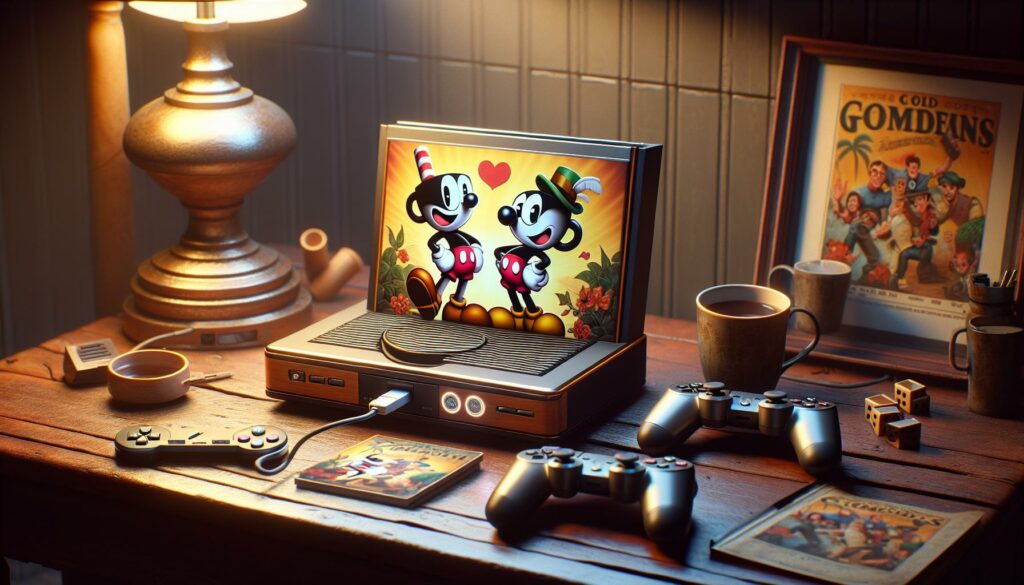

Nintendo’s next console has been the subject of intense speculation, leaked renders, and whispered rumors across forums and industry insiders alike. With the Switch now in its ninth year and showing its age against current-gen powerhouses, the gaming giant is finally gearing up for its next move. Enter the Nintendo X, a codename that’s been circulating since late 2025, representing Nintendo’s answer to the PS6 and Xbox Series X/S era. While Nintendo hasn’t officially confirmed the name “Nintendo X,” multiple sources point to a 2026 reveal that could redefine hybrid gaming once again. This guide breaks down everything confirmed, rumored, and speculated about Nintendo’s next-generation console, from hardware specs to launch titles and how it stacks up against the competition.
Key Takeaways
- Nintendo X is expected to launch in Q4 2026 with a Tegra Orin-based processor, delivering 4x performance gains over the original Switch and enabling DLSS 3.5 upscaled 4K visuals in docked mode.
- The Nintendo X will support full backward compatibility with existing Switch games and libraries, with enhanced patches unlocking higher resolutions and frame rates for select titles.
- Pricing is rumored between $399–$449 USD for the base model, positioning it competitively against the PS5 while maintaining the hybrid portable/docked form factor that defined the Switch’s success.
- Hall Effect analog sticks, a full-width kickstand, and adaptive triggers address longtime Nintendo controller complaints, while native Discord integration and cross-platform parties represent major online infrastructure upgrades.
- Launch exclusives like Mario Kart X, Metroid Prime 4: Beyond, and Splatoon 4 are expected to drive early adoption, though patient gamers may benefit from hardware revisions and expanded game libraries by late 2027.
What Is Nintendo X?
The Nintendo X is the rumored successor to the Nintendo Switch, expected to launch in late 2026 or early 2027. Unlike the Switch OLED or Switch Lite iterations, this isn’t a mid-cycle refresh, it’s a full generational leap. Think of it as Nintendo’s PS5 moment, seven years after the original Switch dropped in March 2017.
Nintendo has remained tight-lipped about official details, but trademark filings in Japan and the EU spotted in January 2026 point to “Nintendo X” as the working name. Industry analyst Takashi Mochizuki reported that Nintendo ramped up dev kit distribution to first-party studios in Q4 2025, suggesting a hardware reveal is imminent. The console is expected to retain the hybrid portable/docked DNA that made the Switch a phenomenon (139.36 million units sold as of December 2025), but with significant under-the-hood upgrades.
The “X” branding reportedly signifies cross-platform play, expandability, and a focus on next-gen experiences, though some insiders believe it’s just a placeholder. Nintendo’s history with naming (Wii U, anyone?) means nothing’s certain until Shigeru Miyamoto walks on stage.
Rumored Release Date and Pricing
Multiple sources, including supply chain leaks and statements from Nvidia (Nintendo’s rumored chip partner again), point to a Q4 2026 launch window. The most credible timeline suggests a September 2026 reveal during a Nintendo Direct, with units hitting shelves in November ahead of the holiday rush. This aligns with Nintendo’s traditional console cadence, the original Switch launched in March 2017, and a 9-10 year gap mirrors the Wii to Wii U transition.
Pricing is where things get murky. The base model is rumored to land around $399-$449 USD, positioning it between the PS5 Digital ($399) and PS5 Standard ($499). A “Pro” or “XL” variant with enhanced storage and a larger OLED screen could push to $549. For comparison, the Switch OLED retails at $349, so a $50-$100 premium for next-gen hardware feels plausible.
Japanese retailers reportedly received preliminary SKU listings in February 2026, listing two models: a standard edition and a bundle with an unannounced Zelda title. Take that with a grain of salt, but it tracks with Nintendo’s MO of pairing hardware launches with killer exclusives.
Hardware Specifications and Performance
Processing Power and Graphics Capabilities
The Nintendo X is rumored to pack a custom Nvidia Tegra Orin-based SoC, a massive leap from the Switch’s aging Tegra X1 (Maxwell architecture from 2015). The Orin chip features an Ampere-based GPU with dedicated ray-tracing cores and DLSS 3.5 support, enabling upscaled 4K output in docked mode and native 1080p at 60fps in handheld.
Leaked benchmarks circulating on Twitter in January 2026 suggest the GPU clocks in at around 1.5 TFLOPS in portable mode and 3.2 TFLOPS when docked, still below the PS5’s 10.28 TFLOPS, but a 4x improvement over the original Switch’s 0.39 TFLOPS docked performance. More importantly, DLSS magic could make games look sharper than raw specs suggest. Imagine Breath of the Wild 2 rendering at 1440p internal resolution and AI-upscaled to 4K at a locked 60fps. That’s the target.
CPU-wise, expect an 8-core ARM Cortex-A78AE setup clocked around 2.0-2.5GHz. That’s competitive with Steam Deck’s Zen 2 cores and should eliminate the stuttering issues that plagued demanding Switch ports like Apex Legends and Witcher 3.
Ram is reportedly 12GB LPDDR5, a huge jump from the Switch’s 4GB. This should fix the asset-loading bottlenecks that forced developers to dial back textures and draw distances on Switch ports.
Storage Options and Expandability
The base Nintendo X model is expected to ship with 256GB UFS 3.1 internal storage, with a premium model offering 512GB. Given that modern AAA games like Tears of the Kingdom clock in at 18GB, 256GB should comfortably hold 10-12 major titles plus indie darlings.
Nintendo is reportedly sticking with microSD expansion (up to 2TB supported), a fan-favorite feature from the Switch era. UHS-II support means faster load times compared to the Switch’s UHS-I standard. Some rumors suggest a proprietary M.2 SSD slot similar to PS5’s expansion bay, but that feels unlikely given Nintendo’s philosophy of affordable, accessible storage solutions.
Cloud save support will presumably carry over from Nintendo Switch Online, though there’s chatter about local backup options this time, a long-requested feature after the backlash over limited save management on Switch.
Display Technology and Resolution
The handheld screen is rumored to be a 7.4-inch Samsung AMOLED panel with a 1080p resolution and 120Hz refresh rate. That’s up from the Switch OLED’s 7-inch 720p display. The higher refresh rate is a game-changer for competitive titles like Splatoon 4 or Smash Bros. successors, though most games will likely target 60fps.
HDR10+ support is expected in both handheld and docked modes, giving Nintendo’s vibrant art styles even more pop. Docked output will support 4K at 60fps or 1080p at 120fps via HDMI 2.1, future-proofing the console for high-refresh displays.
One interesting leak from a Foxconn manufacturing facility mentions VRR (variable refresh rate) support, which would be a first for Nintendo. If true, it’d smooth out frame pacing in demanding open-world games.
Design and Form Factor
Portable vs. Docked Mode Improvements
The Nintendo X reportedly retains the hybrid portable/docked concept, but with refined execution. The dock itself is getting a major upgrade, rumored specs include active cooling with a 120mm fan to prevent thermal throttling during extended play sessions. The Switch’s dock was passive, leading to heat buildup and reduced clock speeds. The X’s dock allegedly boosts GPU clocks by 60-70% when connected, unlocking that 4K DLSS upscaling.
Portable mode improvements center on battery life and weight distribution. Thanks to the more efficient 5nm Tegra Orin chip, battery life is estimated at 5-7 hours for demanding games (compared to the Switch OLED’s 4.5-6.5 hours). The console weighs around 420g, slightly heavier than the Switch OLED (320g) but more balanced thanks to repositioned cooling vents and a redesigned kickstand.
Speaking of the kickstand, it’s finally getting a full-width design similar to the Surface Pro, infinitely adjustable and actually stable on uneven surfaces. Tabletop mode is now viable for serious multiplayer sessions.
Controller Innovation and Ergonomics
The Joy-Con 2 (working name) addresses the biggest pain point of the original: drift. Nintendo’s rumored solution involves Hall Effect analog sticks, which use magnetic sensors instead of physical contact points. No more drift lawsuits. The sticks themselves are slightly larger with textured grips, and the face buttons now have a satisfying mechanical click.
New features include adaptive triggers similar to the PS5’s DualSense (with less travel distance to keep the form factor compact) and enhanced HD rumble motors. The SL/SR buttons when detached are now full-sized, making single Joy-Con play less cramped.
A Pro Controller 2 is expected to launch alongside the console, featuring the same Hall Effect sticks, rear paddle buttons, and a rechargeable battery rated for 50+ hours. The d-pad allegedly uses Cherry MX-style switches for precision in fighting games and 2D platformers.
One wildcard: rumors of a detachable camera module for the top bezel, enabling AR experiences and video chat. That would tie into Nintendo’s historically playful approach to hardware (remember the 3DS cameras?), but it’s unconfirmed.
Launch Titles and Game Library
Confirmed and Rumored Exclusives
No Nintendo console launch succeeds without marquee first-party titles, and the X is shaping up to deliver. While nothing’s officially confirmed, credible leaks and developer interviews paint a promising picture.
Rumored Day-One Titles:
- Mario Kart X: A soft reboot featuring dynamic weather, track deformation, and 32-player online lobbies. Think Mario Kart 8 Deluxe meets Forza Horizon’s event structure.
- Metroid Prime 4: Beyond: After years in development hell, Retro Studios’ next Samus adventure is rumored as a launch window exclusive. Expect ray-traced lighting in alien environments and DLSS-boosted 60fps performance.
- Splatoon 4: The ink-shooter series returns with larger maps, destructible terrain, and a 6v6 ranked mode. Cross-play with Switch version is rumored for the first 6 months post-launch.
- Zelda: Echoes of the Sheikah: An unannounced spin-off focusing on Zelda as the protagonist, set between Ocarina of Time and Breath of the Wild. This one’s pure speculation but gained traction after voice actress Patricia Summersett teased a “surprising project” in December 2025.
Third-party support is also heating up. Reports from Japanese game publishers indicate that Capcom, Square Enix, and Bandai Namco received dev kits in late 2025, with ports of Resident Evil 9, Final Fantasy XVII, and Elden Ring 2 in the works. Whether these launch alongside the console or arrive in 2027 is unclear.
Indie darlings like Hollow Knight: Silksong and Hades III are likely early adopters, given Nintendo’s strong indie relationships showcased through community-focused gaming content over the years.
Backward Compatibility with Switch Games
Backward compatibility is reportedly a cornerstone feature. All physical and digital Switch games will run on the Nintendo X, with enhancements for select titles. Games like Breath of the Wild, Odyssey, and Mario Kart 8 Deluxe will receive free “X Enhanced” patches unlocking higher resolutions, frame rates, and improved textures.
The catch: original Switch cartridges will work, but save data transfer requires a one-time cloud sync via Nintendo Switch Online. There’s no local transfer option rumored, which feels like a forced NSO subscription nudge.
Digital purchases carry over seamlessly, your Switch eShop library will appear in the X’s storefront. Some worry about Joy-Con compatibility: leaked schematics suggest the X uses a slightly wider rail system, meaning old Joy-Cons won’t physically attach. But, they’ll connect wirelessly for multiplayer.
One interesting detail from Nintendo’s storied history suggests the company values preserving game libraries, so full backward compatibility tracks with their long-term philosophy.
Online Services and Network Features
Nintendo Switch Online Evolution
Nintendo Switch Online is getting a major overhaul for the X era, rumored to be rebranded as Nintendo Online+. The current $19.99/year base tier remains, but a new $39.99/year Premium tier adds perks like:
- Cloud gaming for select AAA third-party titles (think Control or Cyberpunk 2077 streaming)
- Early access to game trials and demos
- Monthly “vault” rotations of N64, GameCube, and Wii titles (finally)
- 100GB cloud storage vs. the current paltry offering
Family plans are expected to stick around, but with expanded slots, 12 members instead of 8. The Expansion Pack’s pricing ($49.99/year) is rumored to merge into the Premium tier, simplifying the confusing current structure.
Voice chat is getting a native console solution instead of the clunky smartphone app. Built-in Discord integration was rumored in February 2026 leaks, which would be a seismic shift for Nintendo’s traditionally cautious online approach.
Multiplayer and Social Features
The Nintendo X reportedly introduces cross-platform parties, letting players team up across Switch, X, and even mobile (for compatible games like Mario Kart Tour sequels). Achievements, a feature Nintendo stubbornly avoided, are finally rumored as “Challenges,” offering profile badges and exclusive themes.
A revamped friends list supports status messages, game invites from the home screen, and “join session” functionality without launching the game first. These are basic features in 2026, but welcome additions for Nintendo’s ecosystem.
Streaming integration is another focus. Native Twitch and YouTube streaming from the console, with built-in capture at 1080p60 in handheld or 4K30 docked. The Switch’s 30-second capture limit expands to 5-minute clips, or unlimited recording to microSD.
Regional online tournaments for titles like Smash Bros. and Splatoon 4 are hinted at, with prize pools funded by NSO Premium subscriptions. That could legitimize Nintendo’s competitive scene, which currently lags behind PlayStation and Xbox esports infrastructure.
How Nintendo X Compares to Competitors
Nintendo X vs. PlayStation 6
The PS6, rumored for late 2027 or 2028, will likely dwarf the Nintendo X in raw horsepower. Sony’s console is expected to hit 18+ TFLOPS with native 8K support, while the X tops out around 3.2 TFLOPS docked. But that’s never been Nintendo’s game. The X’s hybrid form factor offers something Sony can’t match: true portability without compromising the home console experience.
Price is another differentiator. The PS6 will likely debut at $599-$699, nearly $200-$250 more than the X’s rumored $399-$449. For families or budget-conscious gamers, that gap matters. Exclusive libraries will decide the winner, if Nintendo delivers Mario, Zelda, and Pokémon at launch, they’ll carve out their audience regardless of specs.
One area where PlayStation dominates: third-party AAA support. Games like GTA VI, Call of Duty, and EA Sports FC will prioritize PS6 over the X due to hardware limitations. Nintendo’s historically leaned into first-party magic and quirky indies, a strategy that worked for the Switch’s 139 million install base.
Nintendo X vs. Xbox Series X/S
The Xbox Series X (12.15 TFLOPS) and Series S (4 TFLOPS) launched in 2020, so they’re mid-cycle when the Nintendo X drops. Microsoft’s Game Pass remains a killer value proposition, $16.99/month for hundreds of games versus Nintendo’s $39.99/year Premium tier with limited retro libraries.
But, Xbox lacks any handheld option. The canceled Xbox handheld and reliance on cloud streaming via Xbox Cloud Gaming doesn’t replicate true portable hardware. Gamers wanting Halo on a plane are stuck with tablets and finicky Wi-Fi. The X’s native portable performance is a tangible advantage.
Cross-play and ecosystem integration favor Xbox currently. Game saves sync across console, PC, and cloud seamlessly. Nintendo’s track record here is shaky, hopefully the X closes that gap. Coverage from specialist gaming outlets suggests Nintendo’s improving third-party relationships, which could mean more parity with Xbox’s indie and AA offerings.
Exclusives are Nintendo’s trump card again. Xbox’s first-party output has been inconsistent (Redfall, Starfield’s mixed reception), while Nintendo’s hit rate with Zelda, Mario, and Animal Crossing is absurdly high. If you want Japanese RPGs and Nintendo franchises, the X wins. If you want Game Pass and shooters, Xbox is the call.
Should You Buy Nintendo X or Wait?
The classic early adopter dilemma: jump in at launch or wait for the inevitable revision?
Reasons to buy at launch:
- Launch exclusives: If Mario Kart X or Metroid Prime 4 are day-one releases, that’s worth the price of admission alone for fans.
- Backward compatibility: Your Switch library gets immediate upgrades. Playing Tears of the Kingdom at 4K60 via DLSS is a free visual overhaul.
- Resale value: Nintendo consoles hold value absurdly well. A launch-edition X could fetch premium prices in collector markets years later.
- FOMO on multiplayer: Being late to Splatoon 4 or the next Smash means climbing ranked ladders against entrenched players. Launch day is the great equalizer.
Reasons to wait:
- Rev 2 hardware fixes: The Switch had multiple silent revisions improving battery life and thermals. The X will likely get a “Lite” or “OLED” variant 12-18 months post-launch with refined ergonomics or cost savings.
- Game library maturity: Six months after launch, you’ll have a clearer picture of third-party support and whether those promised AAA ports materialize.
- Price drops: Nintendo rarely discounts hardware, but bundle deals around Black Friday 2027 could save $50-$100.
- Online service kinks: New infrastructure means potential server instability, save transfer issues, or botched features. Let early adopters beta test.
Personally? If you’re deep in Nintendo’s ecosystem and Mario Kart or Zelda at launch is confirmed, pre-order. If you’re primarily a PS5/Xbox gamer curious about Nintendo exclusives, wait for holiday 2027 bundles. The Switch will remain supported through at least 2027, so there’s no urgency to upgrade immediately.
One consideration from detailed community insights: monitor Nintendo Direct announcements closely. If they reveal a killer app you can’t live without, that’s your sign. Otherwise, patience pays off with Nintendo hardware.
Conclusion
The Nintendo X represents Nintendo’s most ambitious hardware leap since the original Switch redefined hybrid gaming in 2017. With rumored specs like DLSS 3.5, 4K docked output, Hall Effect Joy-Cons, and a revamped online service, the X could finally close the performance gap with Sony and Microsoft, while retaining the portable magic that sold 139 million Switches.
Of course, none of this is confirmed until Nintendo officially unveils the console. Trademark filings, supply chain leaks, and dev kit reports point to a Q4 2026 launch, but Shigeru Miyamoto’s coy smile could still surprise us with a different name, form factor, or gimmick entirely. That’s the fun and frustration of covering Nintendo.
Whether the X justifies a $399-$449 price tag depends on launch titles, third-party support, and how smoothly backward compatibility executes. Early adopters will likely enjoy premium experiences and the thrill of exploring new hardware. Patient gamers might snag better bundles and a more stable ecosystem a year later.
Either way, 2026 is shaping up as a pivotal year for Nintendo. The X isn’t just a Switch successor, it’s a statement about where hybrid gaming goes next. Keep your eyes on the next Nintendo Direct. Things are about to get interesting.