Nintendo’s Splatoon franchise has carved out a unique identity in the competitive gaming landscape since its 2015 debut on the Wii U. The series transforms team-based shooter mechanics into something distinctly colorful, strategic, and skill-rewarding, where victory goes to whoever inks the most territory, not just who gets the most kills. With Splatoon 3 currently leading the charge on Nintendo Switch, and discussions already swirling around potential future titles, there’s no better time to understand what makes this franchise tick and why millions of players keep coming back for more ink-soaked matches.
Key Takeaways
- Splatoon stands apart from traditional shooters by replacing kill counts with territory control—the team that inks the most arena wins, rewarding strategy and positioning over raw mechanical skill.
- The inking system enables vertical gameplay through wall and ceiling climbing, while also allowing teammates to swim faster through inked terrain, creating dynamic three-dimensional combat.
- Splatoon 3’s competitive ranked system uses a power rating ladder across four distinct modes (Splat Zones, Tower Control, Rainmaker, and Clam Blitz), each demanding different objective strategies and constant meta adaptation.
- Weapon synergy and loadout coordination are critical to competitive success—mismatching weapons on your team can cripple momentum, making diverse, balanced team composition essential.
- Splatoon 3 is currently the active entry in the franchise on Nintendo Switch with ongoing seasonal updates, balance patches, and new content through 2026, making it the definitive platform for both casual and competitive play.
What Is Splatoon and Why It Matters
Splatoon is Nintendo’s answer to competitive team shooters, but with a twist: you’re not directly fighting enemies in a traditional sense. Instead, you’re painting the arena with your team’s color of ink. The more territory your team inks, the higher your chances of winning. It sounds simple, but the strategic depth runs deep.
The franchise spans three main entries: Splatoon launched on Wii U with fresh mechanics that nobody had really seen before. Splatoon 2 brought the formula to Nintendo Switch in 2017, vastly expanding the player base and introducing new weapon types and maps. Splatoon 3, released in September 2022, remains the flagship title on Switch and has continued receiving balance patches and seasonal content updates well into 2026.
What makes Splatoon matter in gaming isn’t just novelty, it’s execution. The game respects player skill while remaining accessible to newcomers. Whether you’re a casual player jumping into a turf war or a competitive esports player grinding ranked matches, the mechanics reward precision, positioning, and teamwork equally.
Core Gameplay Mechanics That Define The Series
Inking and Territory Control
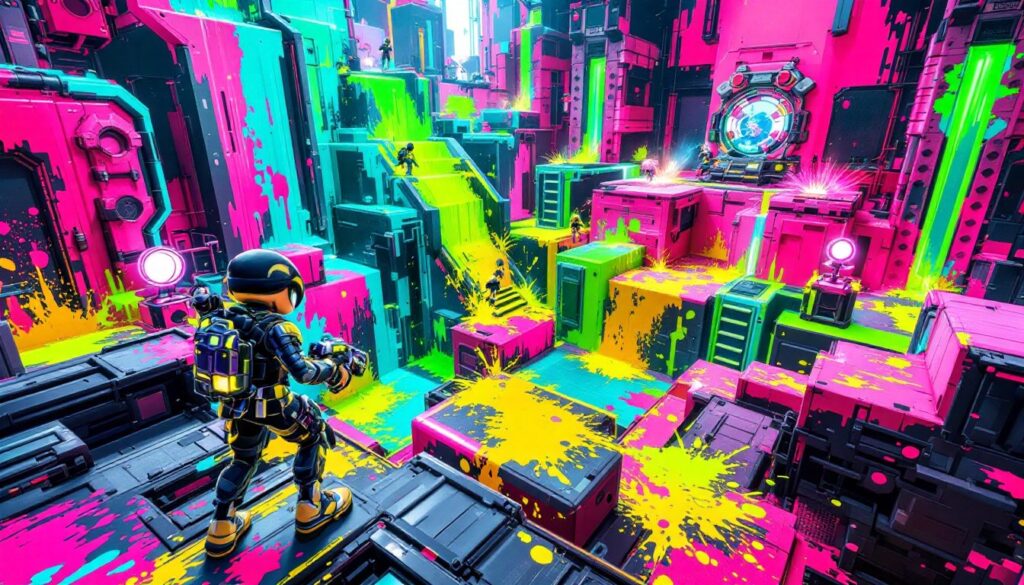
Inking is the foundational mechanic that separates Splatoon from every other shooter. When you fire your weapon, you’re not shooting bullets, you’re spraying or flinging ink that covers terrain and walls. This ink serves multiple purposes: it marks territory (essential for winning turf wars), it lets teammates swim through it for faster movement, and it reveals enemy positions when you ink near them.
Territory control requires more than just trigger discipline. You need map awareness, positioning, and the ability to read where opponents are likely to push. Holding choke points, defending your base, and pushing into enemy territory all matter. The inking system also introduces verticality, you can ink walls and ceilings to climb them, creating three-dimensional gameplay that traditional shooters often lack.
Weapons and Gear Systems
Splatoon features dozens of weapons across multiple classes, and choosing the right one defines your playstyle. Shooters are all-rounders with moderate range and fire rate. Chargers are precision weapons with longer range but slower fire rates, they reward accuracy heavily. Sloshers arc ink in waves, excellent for inking terrain quickly. Roller and Brush weapons cover huge swaths of ink instantly, perfect for pushing aggressively.
Each weapon comes with a Primary Ability, Sub Weapon, and Special Attack. Your loadout determines how you support your team. A player running Splat Bomb as a sub can deny enemy advances, while someone with Ink Armor as their Special can protect teammates during crucial pushes.
Gear stats add another layer: Main Power boosts your primary ability’s effectiveness, while Sub Power enhances your sub weapon or special charge rate. Coordinating gear across your team ensures you’re not all running the same builds. The meta shifts with balance patches, Splatoon 3’s recent updates in 2026 have reshuffled weapon viability, making loadout diversity more important than ever.
Splatoon 3: The Current Standard
Splatoon 3 is where the franchise stands in 2026, and it’s significantly more robust than its launch version. The base game introduced the Splatlands setting, new weapons like the Tri-Stringer and Reef-Lux, and overhauled matchmaking. But the real meat came post-launch through seasonal updates that added new weapons, maps, and balance changes.
The current meta emphasizes positioning over raw aim. Weapons like the Splat Charger and N-ZAP dominate ranked matches because they reward precision and map control. Aggressive Roller players still exist in lower ranks, but competitive play revolves around maintaining territory advantages and using specials at critical moments.
Splatoon 3 also introduced Anarchy Battles as a replacement for competitive ranked play, offering a more dynamic, chaotic mode that rewards quick adaptation. Regular Turf War remains the casual entry point, no rank anxiety, just ink splatting. Nintendo Life covers detailed guides and map strategies for players looking to improve quickly.
Why Splatoon 3 matters now: it’s the only active entry in the series on current hardware. While Splatoon 2 had a dedicated playerbase for years, Nintendo has officially shifted support to Splatoon 3, meaning new weapons, balance patches, and events only happen here. Any Splatoon 4 rumors circulating online remain unconfirmed speculation, the focus is entirely on Splatoon 3 for the foreseeable future.
Competitive Play and Ranking Systems
If you’re serious about Splatoon, ranked modes separate casual fun from genuine competitive play. Anarchy Battles (the current ranked ladder) uses a power rating system instead of traditional ranks. You gain or lose points based on wins and losses, and your power rating climbs as you improve.
Series 1 through Series 5 define the seasonal structure in Splatoon 3. Each series lasts several months and features different rule rotations. Your power rating is separate for Splat Zones, Tower Control, Rainmaker, and Clam Blitz, each mode has distinct strategies. A player dominant in Splat Zones might struggle in Rainmaker without understanding the objective mechanics.
Key competitive fundamentals:
- Map Knowledge: Know where weapons spawn, where sightlines open, and which teammates cover which flank.
- Weapon Synergy: Coordinate with your team on loadouts. Don’t stack four chargers if nobody can push aggressively.
- Special Economy: Track when enemies’ specials are available. Push when they’re charged: retreat when they’re not.
- Rotation Awareness: Understand how the map’s playable zone shifts in modes like Tower Control and Rainmaker.
Players grinding to X-Rank (the highest tier) often watch streams and check competitive breakdowns across gaming media to stay current with meta shifts. The 2026 patch cycle has been particularly brutal for weapon balance, with several once-dominant picks receiving nerfs and previously overlooked options becoming viable again. This keeps competitive play fresh but demands continuous adaptation from serious players.
Conclusion
Splatoon remains one of gaming’s most distinctive franchises because it refuses to follow the traditional shooter formula. Inking territory instead of counting eliminations, emphasizing teamwork and positioning over raw mechanical skill, these choices make it accessible and endlessly rewarding. Splatoon 3 is the definitive entry right now, with a thriving competitive scene and regular updates keeping the meta dynamic. Whether you’re a casual player enjoying Turf Wars with friends or grinding toward X-Rank, Splatoon’s ink-soaked world has something for everyone.