Super Smash Bros. has evolved from a quirky Nintendo 64 experiment into one of gaming’s most iconic franchises. What started as a 12-character crossover in 1999 has spawned multiple generations, millions of dedicated players, and a thriving esports scene that rivals traditional fighting games. Whether you’re a newcomer picking up a controller for the first time or a competitive player grinding ladder matches, understanding the series’ mechanics, roster, and history is essential. This guide breaks down everything you need to know about Super Smash Bros. in 2026.
Key Takeaways
- Super Smash Bros. evolved from a 12-character Nintendo 64 experiment in 1999 into a global esports phenomenon with millions of players and a thriving competitive scene rivaling traditional fighting games.
- The franchise’s signature percentage-based knockback system rewards precise spacing and patience, making every hit more impactful as match damage accumulates.
- Super Smash Bros. Ultimate revolutionized the series by featuring every character from previous games plus newcomers, totaling over 70 characters at launch and selling over 35 million copies worldwide.
- The diverse roster includes rushdown fighters, zoners, swordfighters, grapplers, and trappers—each demanding entirely different playstyles and strategies for success.
- Competitive Super Smash Bros. tournaments require mastery of advanced mechanics like directional influence, edge-guarding, and character-specific combos alongside fundamental movement and spacing.
- Whether playing casually or competitively, understanding Smash Bros.’ mechanics, roster diversity, and evolving meta keeps the 27-year-old franchise fresh and engaging for all skill levels.
A Brief History and Evolution of the Series
Super Smash Bros. started as a passion project at Nintendo that nobody expected to succeed. The original N64 release in 1999 featured just 12 characters, Mario, Link, Pikachu, Donkey Kong, and others, fighting across platform-based stages with a mechanics that felt completely foreign to traditional fighting games. Instead of reducing a health bar, players knocked opponents off the stage to win. This percentage-based knockback system became the franchise’s defining feature.
Super Smash Bros. Melee (GameCube, 2001) supercharged the formula with faster gameplay and 26 characters. Melee’s technical depth, especially wavedashing and dash-dancing, turned it into a competitive powerhouse that’s still played at tournaments today. By the early 2000s, Melee had established a grassroots competitive scene that would eventually land it at Major League Gaming events.
Brawl (Wii, 2008) slowed the pace dramatically and added Smash Balls for Final Smashes, along with a story mode (Subspace Emissary) that became legendary. The roster grew significantly with characters like Meta Knight, Pit, Snake, and Sonic bringing new playstyles to the series.
Super Smash Bros. for Nintendo 3DS and Wii U (2014) split the franchise into two versions with a shared roster of characters. The Wii U version introduced 8-player Smash and custom Mii Fighters, expanding what the game could be.
Super Smash Bros. Ultimate (Switch, 2018) changed everything with its “Everyone is here” tagline, every character from every previous game returned, plus dozens of newcomers. The roster grew to over 70 characters at launch, with DLC fighters added regularly. Ultimate has sold over 35 million copies worldwide, making it one of the best-selling fighting games ever.
Core Gameplay Mechanics Every Player Should Know
Fundamentals and Controls
At its core, Super Smash Bros. is about movement and spacing. Players walk, dash, jump, and fast-fall through the air while executing attacks. The control scheme is deceptively simple: normal attacks (tilts, jabs, aerials), smash attacks (charged, high-knockback), and special moves (B button + direction). Grabbing leads into throws, up, down, forward, or back, each with different applications depending on the stage and opponent positioning.
Advanced techniques vary by game. Melee players chain wavedashes and dash-dances for precise spacing. Ultimate players use perfect pivots and attack cancels for edge-guarding. These aren’t mandatory to have fun, but they’re essential if you’re aiming for competitive play.
Understanding the Damage and Stock System
Damage percentage starts at 0% and climbs as a character takes hits. At higher percentages, knockback increases dramatically, a move that barely pushes an opponent at 0% might send them flying off the stage at 80%. This is the core tension of Super Smash Bros.: every hit you land matters more as the match progresses, rewarding patience and spacing.
Standard competitive rulesets use 2–4 stocks per player with a 6–8-minute timer. When a player loses all their stocks, they’re out. Items are turned off in competitive play to ensure fairness and focus on player skill rather than random drops. Understanding how to manage your stock while pressuring opponents to lose theirs is fundamental.
Notable Characters and Playstyles
Super Smash Bros.’ roster is genuinely diverse. Different characters demand entirely different approaches, which keeps the game fresh even after hundreds of hours.
Rushdown fighters like Fox, Captain Falcon, and Mario thrive on aggression. They’re fast, have combo potential, and need to be in your face to apply pressure. Playing rushdown is about reading your opponent and never giving them breathing room.
Zoners like Samus, Link, and Mega Man use projectiles to control space. They want to keep you at distance and punish approaches. Zoning can feel frustrating to play against if you’re not used to it, but it’s a legitimate and powerful strategy.
Swordfighters like Marth, Lucina, and Cloud have disjointed range, their attacks extend far beyond their hurtbox, making spacing tricky for opponents. These characters reward precise positioning and spacing awareness.
Grapplers like Donkey Kong, Bowser, and Incineroar lack speed but hit absurdly hard. A single grab can turn a match, making them terrifying in the right hands.
Floaty/air-based characters like Jigglypuff and Kirby excel in the air but struggle on the ground. They’re high-risk, high-reward picks that reward mastery.
Trappers and setplay characters like Snake, Pac-Man, and R.O.B. control the game through setup options and positioning. They’re cerebral characters for players who think several moves ahead.
Character strength fluctuates with patches and meta shifts. An in-depth Smash Ultimate tier list shows which characters are currently dominant, though tier position doesn’t define a character’s viability at most skill levels.
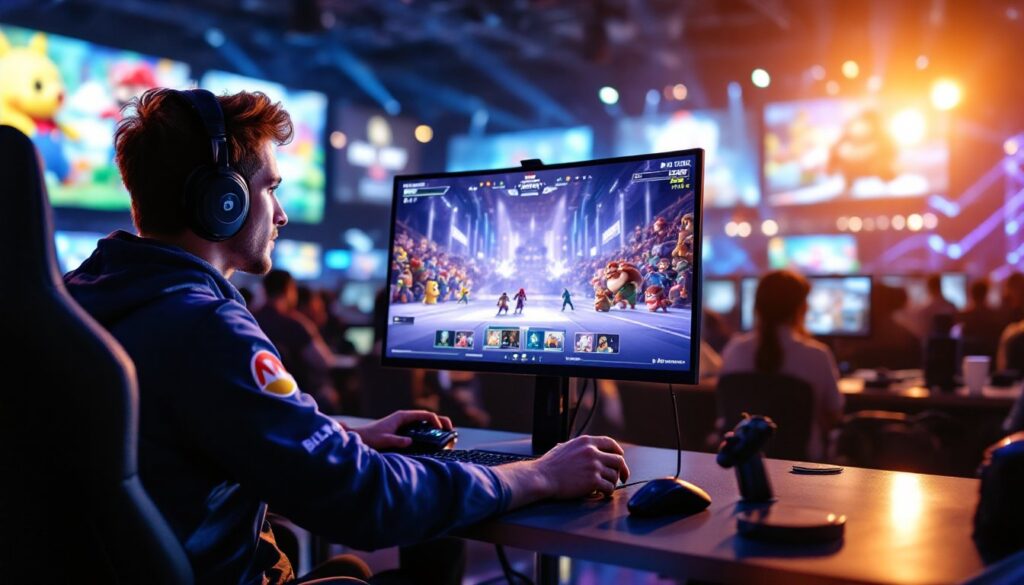
Competitive Play and Esports Scene
Melee’s competitive scene emerged organically in the early 2000s and grew into something massive. By 2004, Major League Gaming was running official Melee circuits, legitimizing it as an esport. Melee tournaments still draw thousands of competitors and viewers, proving the staying power of a 23-year-old game.
Brawl had its own competitive run, though wavedashing’s removal and slower gameplay created division in the community. Smash 4 (the 3DS/Wii U version) built momentum with international majors like EVO and Genesis, establishing a professional scene with sponsorships and prize pools.
Super Smash Bros. Ultimate launched with massive hype and justified it. The game hosts regular majors at EVO, Genesis, Super Smash Con, and dozens of other events worldwide. Notable players compete across all regions, and the meta constantly shifts as new characters are discovered and strategies evolve.
Competitive rulesets standardize legal stages (typically Final Destination and a few neutral/counterpick stages), ban items, and enforce stock/time limits. Players spend months laboring over matchup spreads, practicing edge-guards, and perfecting their character’s combos. The depth rivals any traditional fighting game, with mechanics like directional influence (DI), edge-guarding, and recovery making every advantage crucial.
A comprehensive beginner’s guide covers the fundamentals needed to start playing seriously, including controls, damage mechanics, and basic strategy. The competitive tier list reflects how the meta shifts with patches and player innovation, helping competitors understand current character viability.
Whether watching a local tournament or a world championship, competitive Smash showces incredible precision, spacing, and game knowledge. It’s why the franchise endures.
Conclusion
Super Smash Bros. evolved from a bold Nintendo experiment into a legitimate fighting game franchise that defined platform fighters. The percentage-based knockback system, diverse roster, and technical depth create a game that’s accessible but infinitely deep. Whether you play casually with friends or grind competitive tournaments, understanding the series’ history, mechanics, and playstyles enriches the experience. The franchise isn’t going anywhere, and neither should you.