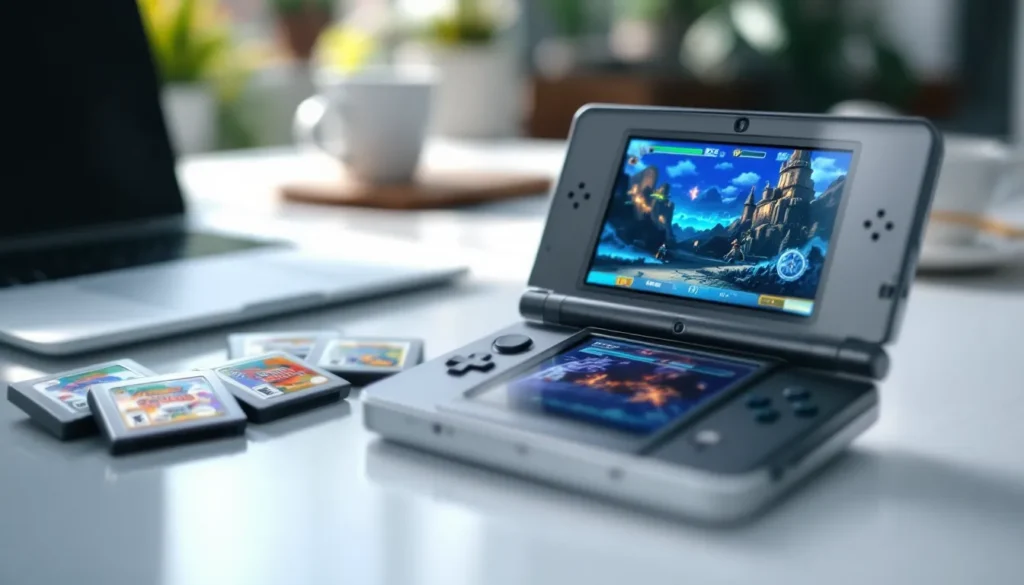
The Nintendo DS library sits in an unusual sweet spot. It’s old enough that most gamers have moved on, yet recent enough that the hardware still functions and the games remain visually coherent on modern displays. And if you’re hunting for RPGs, the kind that prioritize story depth, character progression, and strategic combat, the DS delivered an embarrassment of riches. Between 2004 and 2012, the dual-screen handheld became a dumping ground for experimental JRPGs, beloved ports, and niche tactical adventures that would never see the light of day on home consoles.
In 2026, these titles haven’t aged poorly. Many hold up better than their HD successors, thanks to tight design philosophies and pre-microtransaction business models. Whether you’re revisiting childhood favorites or exploring the library for the first time, the DS RPG catalog remains one of the deepest in handheld history. This guide breaks down the essentials, the overlooked gems, and the subgenres that made the platform a role-playing paradise.
Key Takeaways
- DS RPG games remain highly playable and mechanically sound in 2026, with many titles holding up better than their modern successors due to tight design and pre-microtransaction business models.
- The Nintendo DS dual-screen design revolutionized turn-based JRPG interfaces by enabling seamless menus and combat on separate screens, attracting major developers like Square Enix, Atlus, and Level-5.
- Pokémon Diamond/Pearl/Platinum and HeartGold/SoulSilver defined the platform with the Physical/Special split mechanic and multiplayer innovation, while Black/White pushed narrative ambition by tackling themes of ideology and morality.
- Hidden gems like Radiant Historia (grid-based tactical combat with timeline manipulation) and The World Ends with You (stylus-driven action-JRPG fusion) showcase experimental design that would struggle on home consoles.
- Physical cartridges remain the most accessible way to play DS RPG games, though prices have surged ($80–$150+ for sought-after titles), making the 3DS backward-compatible console, emulation, or import options viable alternatives for collectors and enthusiasts.
Why the Nintendo DS Became an RPG Powerhouse
The DS didn’t stumble into RPG dominance, it was engineered for it. The dual-screen design gave developers a built-in UI solution: menus, maps, and inventory on the bottom touchscreen, action on top. No more pausing mid-battle to fumble through nested menus. For turn-based combat, this was transformative.
Japanese developers, in particular, leaned hard into the platform. Square Enix, Atlus, and Level-5 all treated the DS as a primary platform rather than a dumping ground for B-tier spinoffs. The install base helped, over 154 million units sold worldwide meant even niche RPGs could find an audience. Games like Etrian Odyssey and Radiant Historia would’ve been financial suicide on PS3, but on DS, they thrived.
The timing mattered, too. The mid-2000s saw a JRPG renaissance, and the DS caught the wave. Developers who cut their teeth on SNES and PS1 classics were now in senior roles, pushing for passion projects. The result? A library that balanced nostalgia-driven ports (Chrono Trigger, Final Fantasy III) with bold experiments (The World Ends with You, Ghost Trick).
Backward compatibility with Game Boy Advance cartridges didn’t hurt, either. It positioned the DS as the ultimate handheld for RPG collectors, with access to both libraries. By 2009, owning a DS meant carrying decades of role-playing history in your pocket.
Classic JRPGs That Defined the DS Era
Pokémon Series: Gateway RPGs for Every Age
Four mainline generations hit the DS: Diamond/Pearl/Platinum, HeartGold/SoulSilver, Black/White, and Black 2/White 2. Gen IV introduced the Physical/Special split, a mechanic so fundamental it’s hard to remember Pokémon without it. Moves like Crunch and Shadow Ball finally made sense for their respective types, and competitive battling evolved overnight.
HeartGold/SoulSilver remains the gold standard for remakes. The Pokéwalker peripheral let players level Pokémon while jogging (a proto-Pokémon GO), and the dual-region structure meant 16 gym badges instead of eight. Following Pokémon walked behind trainers on-screen, a feature fans have begged for in every subsequent generation.
Gen V pushed narrative ambition further than any prior entry. Black/White tackled themes of ideology and morality through Team Plasma’s animal-liberation rhetoric, and the sequels, actual sequels, not third versions, advanced the timeline by two years. For players who grew up with Red and Blue, these nintendo ds rpg games matured alongside them.
Chrono Trigger: The Timeless SNES Port Perfected
Square Enix’s 2008 DS port of Chrono Trigger is the definitive version. It retained the pixel-perfect visuals and Yasunori Mitsuda’s soundtrack while adding dual-screen support, animated cutscenes, and a monster-battling arena. The extra dungeons (Dimensional Vortex and Lost Sanctum) are skippable filler, but the core 20-hour campaign remains untouchable.
New Game+ remains one of the genre’s best replayability hooks. Beating Lavos at different story points unlocks 13 unique endings, and carrying over stats lets players demolish bosses that once took a dozen attempts. The combo system, where party members chain techs like X-Strike and Arc Impulse, still feels ahead of its time.
For those who missed the SNES original or couldn’t stomach PS1 load times, the DS version is the entry point. It’s turn-based combat distilled to its purest form: no grinding required, every encounter deliberate, every boss a puzzle.
Dragon Quest Series: Traditional Turn-Based Excellence
Three mainline entries and two remakes hit the DS. Dragon Quest IV, V, and VI (the Zenithian Trilogy) arrived in the West for the first time in their complete forms. DQ V stands out as the emotional peak, a multi-generational story where players grow from child to parent, with the monster recruitment system adding a Pokémon-like collectathon layer.
Dragon Quest IX: Sentinels of the Starry Skies was the system-seller. A full-fledged multiplayer action RPG, it supported four-player local co-op and featured over 120 vocations (job classes) to master. The postgame stretched beyond 100 hours, with legacy bosses from prior entries appearing as superbosses. In Japan, DQIX sold over 5.8 million copies, a cultural phenomenon.
Akira Toriyama’s art direction (yes, the Dragon Ball creator) gives these rpg ds games a cohesive visual identity. Slimes, Dracky, and Metal Slimes became gaming icons, and the pun-heavy dialogue localization by Plus Alpha Translations remains some of the sharpest writing in the genre.
Hidden Gem RPGs You May Have Missed
Radiant Historia: Time-Bending Strategy Meets Story
Atlus dropped this in 2011, late in the DS lifecycle, and it vanished under the 3DS hype. Radiant Historia combines grid-based tactical combat with a branching timeline narrative. Players manipulate turn order to chain attacks, shoving enemies into stacked positions for multi-target damage. It’s part chess, part traditional JRPG.
The White Chronicle lets protagonist Stocke jump between two parallel timelines, Standard and Alternate, making choices that ripple across both. Dead ends force players to rewind and rethink decisions, creating a narrative structure that feels earned rather than gimmicky. Yoko Shimomura’s soundtrack (composer of Kingdom Hearts and Street Fighter II) elevates every scene.
The 3DS remake, Perfect Chronology, added voice acting and a third timeline, but purists argue the DS original’s pacing is tighter. Either way, it’s a must-play for anyone who thinks they’ve exhausted the genre’s storytelling potential.
The World Ends with You: Tokyo’s Urban Fantasy
Square Enix’s 2007 passion project remains one of the weirdest, most stylish JRPGs ever made. Set in Shibuya, Tokyo, it follows Neku Sakuraba through the Reaper’s Game, a week-long death match where players battle Noise (monsters made of negative emotions) using psychic pins.
The dual-screen combat system is polarizing. Players control Neku on the bottom screen with the stylus while managing partner attacks on the top screen with the D-pad. It’s chaotic, demanding, and unlike anything before or since. The soundtrack, a mix of J-pop, hip-hop, and rock, is all killer, no filler. Tracks like “Calling” and “Twister” still slap in 2026.
Fashion brands function as equipment, with trends fluctuating by district. Wearing popular brands in the right neighborhood boosts stats, adding a light social-simulation layer. The writing tackles adolescent isolation and growth without the usual anime tropes, making it resonate with older audiences. An anime adaptation premiered in 2021, introducing the story to a new generation.
Tactical and Strategy RPGs for Deep Gameplay
Fire Emblem: Shadow Dragon and the Series Evolution
Nintendo’s 2008 remake of the original Fire Emblem brought permadeath tactics to Western audiences who discovered the series through Awakening. Shadow Dragon is brutally unforgiving: lose a unit, and they’re gone. No time-rewind mechanic, no casual mode. It’s old-school tactical design where positioning and resource management decide survival.
The story follows Marth (yes, the Smash Bros. swordsman) as he reclaims the kingdom of Altea. Character depth takes a backseat to strategic complexity, support conversations are minimal, and units function more like chess pieces than developed personalities. For players who want mechanics over melodrama, that’s a feature, not a bug.
Reclassing lets units change jobs mid-campaign, opening build variety. Turn a slow-moving knight into a mobile myrmidon, or pivot your mage into a tanky general. The arena mode, a gambling mini-game where units risk permadeath for experience and gold, adds high-stakes risk-reward tension.
Final Fantasy Tactics A2: Grid-Based Combat Mastery
Square Enix’s 2008 sequel to the Game Boy Advance original expanded the job system to over 400 abilities across 50+ classes. The Law system returns: break the Judge’s arbitrary rules (“No Fire damage,” “No attacking from behind”) and units get penalized or imprisoned.
The story follows Luso, a kid transported to Ivalice via a magic book. It’s lighter than the original FFT‘s political intrigue, leaning into Saturday-morning adventure vibes. The mission-based structure (over 300 quests) makes it perfect for handheld play, knock out a skirmish during a commute, then shelve it.
The combo system rewards synergy. Stack Elementalists with Summoners for magic chains, or pair dual-wielding Ninjas with Thieves for speed-based shenanigans. Mastering all jobs takes 100+ hours, and the postgame superbosses demand min-maxed builds. This is one of those ds rpg titles where the postgame is the real game.
Action RPGs and Real-Time Combat Experiences
Kingdom Hearts Series: Disney Meets Square Enix
Three entries hit the DS: 358/2 Days, Re:coded, and Dream Drop Distance (on 3DS, but backward-compatible context matters). 358/2 Days focuses on Roxas and Organization XIII, filling the narrative gap between Kingdom Hearts and Kingdom Hearts II. The mission-based structure and panel system (equipping abilities like Tetris blocks) split fans, but the multiplayer co-op missions added replayability.
Re:coded is the oddball, a retelling of the first game’s story through data simulations. It experiments with genre-blending: turn-based command decks, side-scrolling platforming, and rail-shooter segments. It’s the series at its most self-indulgent, but completionists need it for lore.
Real-time combat in these entries never matches the console versions’ fluidity, but the ambition is commendable. Sora’s combo strings, magic shortcuts, and summons translate surprisingly well to button-mashing handheld play. For Disney nostalgia blended with JRPG progression, these remain accessible entry points.
Castlevania: Portrait of Ruin and Dawn of Sorrow
Konami’s Castlevania entries leaned hard into Metroidvania exploration with RPG stat progression. Dawn of Sorrow (2005) introduced the Tactical Soul system, defeated enemies drop souls with unique abilities. Equip the right combination, and players transform into demons, summon familiars, or launch elemental attacks.
Portrait of Ruin (2006) added co-op character switching. Jonathan Morris (whip-wielder) and Charlotte Aulin (mage) can be swapped mid-combat or controlled simultaneously for puzzle-solving. The painting-world gimmick sends players into alternate dimensions styled after different art movements, a clever use of the DS hardware.
Both games feature interconnected castles with hidden rooms, breakable walls, and secrets that demand multiple playthroughs. The level-up system and equipment grinding scratch the RPG itch, while the tight 2D platforming keeps combat skill-based. Speedrunners still compete in these titles, with glitch-heavy routes shaving hours off completion times.
Dungeon Crawlers and First-Person RPGs
Etrian Odyssey Series: Map Your Own Adventure
Atlus crafted three mainline entries for DS: Etrian Odyssey, Etrian Odyssey II: Heroes of Lagaard, and Etrian Odyssey III: The Drowned City. The hook? Players hand-draw dungeon maps on the touchscreen as they explore. Every wall, treasure chest, and hidden door gets manually charted. It’s tedious. It’s brilliant. It’s the anti-handholding design philosophy distilled.
The first-person dungeon crawling pairs brutal difficulty with deep party customization. Twenty-seven unique classes across the trilogy (Landsknecht, Hexer, Zodiac, etc.) enable wildly different builds. A party of glass-cannon mages plays nothing like a tank-heavy defensive squad, and FOEs, roaming superbosses visible on the map, force resource management and escape-route planning.
Yuzo Koshiro’s soundtracks (the Streets of Rage composer) blend orchestral and synth into atmospheric dungeon themes. The postgame stratums push into 30+ floor mega-dungeons with bosses that demand specific counter-strategies. Veterans of classic dungeon crawlers praise the series for respecting player intelligence, no quest markers, no autosave, just you versus the labyrinth.
Where to Find DS RPG Games in 2026
Physical cartridges remain the most reliable option, but prices have spiked. Radiant Historia and Solatorobo: Red the Hunter routinely hit $80-$150 on eBay for complete-in-box copies. Pokémon HeartGold/SoulSilver with the Pokéwalker? Triple digits, easy.
Retro game stores (GameStop still carries used DS titles in select locations) and local resale shops occasionally yield deals. Garage sales and estate auctions are wild cards, someone’s childhood collection might be sitting in a shoebox for $20.
Online marketplaces like Mercari, OfferUp, and Facebook Marketplace tend to price lower than eBay, but authentication is buyer-beware. Reproduction cartridges flood the market, especially for high-value titles. Check for Nintendo’s embossed logo on the cartridge label and compare font kerning to verified copies.
Digital availability is a mess. The 3DS eShop shut down in March 2023, killing the primary digital storefront. Some DS games were never digitally released, meaning physical is the only legal avenue. Third-party sellers on Amazon often list “new” copies at inflated prices, scrutinize seller ratings before committing.
Import options exist for Japan-exclusive titles. Soma Bringer (an action RPG by Monolith Soft) and 7th Dragon never left Japan, but fan translations exist for those willing to patch ROMs. Play-Asia and CDJapan ship internationally, though import duties vary by region.
Playing DS RPGs Today: Emulation vs Original Hardware
Original hardware offers authenticity, but the DS Lite and DSi are aging. Hinges crack, shoulder buttons stick, and replacement parts dwindle. The 3DS and 3DS XL play DS cartridges with backward compatibility, and their larger screens ease eye strain during long sessions. Battery life on refurbished 3DS units typically hits 3-5 hours depending on brightness settings.
Emulation on PC via DeSmuME or MelonDS has matured significantly. Both support upscaling, save states, and fast-forward, game-changers for grinding-heavy RPGs. Touchscreen functionality maps to mouse input, though stylus-heavy games like The World Ends with You feel clunkier without physical feedback.
Handheld emulation devices (Anbernic RG35XX, Retroid Pocket 3+) run DS games at native resolution with minimal setup. These devices support Bluetooth controllers, but again, touchscreen games suffer. The dual-screen layout forces compromises, either stack screens vertically (awkward for action games) or display side-by-side (which wastes screen real estate).
Android emulation via DraStic DS has become shockingly competent. Phones with stylus support (Samsung Galaxy Note series, though discontinued) recreate the DS experience almost perfectly. Performance on mid-range devices (Snapdragon 700-series or better) is flawless, and cloud saves sync progress across devices.
Legal gray areas persist. Dumping owned cartridges for personal emulation falls under fair use in most jurisdictions, but downloading ROMs, even for games you own, violates copyright law. Nintendo aggressively pursues ROM sites, so sourcing requires caution. For those exploring the library through retrospective coverage, understanding the legal landscape is part of the conversation.
Conclusion
The DS RPG library isn’t just a nostalgia trip, it’s a masterclass in handheld game design. Developers understood the platform’s strengths and constraints, crafting experiences that respected player time while delivering depth. Whether you’re chasing Pokémon across two regions, mapping labyrinths in Etrian Odyssey, or unraveling timelines in Radiant Historia, these games hold up because they were built on mechanics, not gimmicks.
In 2026, playing these titles requires effort. Hardware is fragile, cartridges are expensive, and digital storefronts are ghost towns. But the payoff, discovering why a generation of gamers considers the DS their favorite platform, makes it worth the hassle. Fire up that old clamshell, charge the battery, and immerse. The dual screens are waiting.