The Nintendo Switch OLED has redefined portable gaming since its October 2021 launch, proving that a handheld console can deliver genuine, meaningful upgrades without losing what made the original Switch revolutionary. If you’ve been sitting on the fence about upgrading, 2026 is a solid year to reconsider, the game library has exploded, and the OLED model’s improvements feel less like gimmicks and more like essentials. From the stunning 7-inch display to the expanded storage, this isn’t just a Nintendo Switch with a fresh coat of paint. It’s a refinement of everything gamers loved about the platform, built for those who want better visuals, longer sessions, and reliability that lasts.
Key Takeaways
- The Nintendo Switch OLED’s 7-inch OLED display delivers deeper blacks, vivid colors, and superior contrast compared to the original LCD panel, making games like Zelda: Tears of the Kingdom visibly sharper and more immersive.
- Doubled internal storage (64 GB vs. 32 GB) and improved speakers make the Nintendo Switch OLED more practical for extended handheld gaming sessions without constant microSD card juggling.
- The hybrid three-mode design—TV docking, tabletop kickstand, and handheld play—remains unmatched in console flexibility, allowing seamless transitions from home to portable gaming in seconds.
- A wired LAN port in the redesigned dock enhances online stability for competitive players in titles like Splatoon 3 and Super Smash Bros. Ultimate.
- The Nintendo Switch OLED runs the entire Switch library of hundreds of titles and supports microSD expansion up to 2 TB, making it the ideal entry point for new players and collectors.
- Five years after launch, the OLED model represents Nintendo’s best iterative design, offering essential quality-of-life upgrades that justify the upgrade even for existing Switch owners.
What Makes The Switch OLED Stand Out
The Brilliant 7-Inch OLED Display
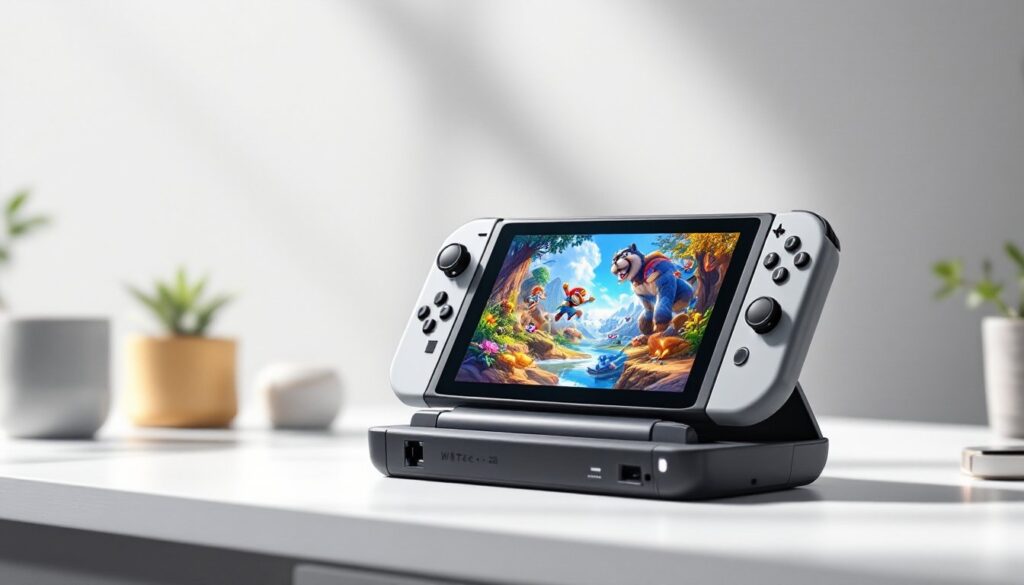
The headline upgrade is the display, and it absolutely deserves the spotlight. The 7-inch OLED screen ditches the LCD panel of the original Switch for a true OLED array, which means each pixel produces its own light. This isn’t just brighter whites, it’s deeper blacks, more vivid colors, and contrast that makes every frame pop. When you’re scrolling through menus or diving into a vibrant indie title, the difference is immediately visible.
The bezels are slimmer too, giving you more screen real estate in a chassis that’s barely different in size. Titles like Legend of Zelda: Tears of the Kingdom and Mario Kart 8 Deluxe look noticeably sharper and more alive on the OLED panel. If you’re playing portable, this is where you’ll notice the biggest quality jump compared to the standard Switch.
Enhanced Storage And Performance
The 64 GB internal storage is a practical upgrade that many overlook. The original Switch shipped with 32 GB, half of which was eaten up by system software. The OLED doubles that, though Nintendo reserves some space for system updates and game data. It’s not infinite, but it’s enough to hold a few major titles without constantly juggling microSD cards.
The OLED also packs improved speakers, so handheld audio isn’t tinny anymore. When you’re playing with the console in your hands, the audio actually fills the space around you. Battery life sits at 4.5–9 hours depending on usage, which is solid for extended travel. The system still runs the same processor as the original Switch, so performance is identical, this was never about raw power, but rather polish and quality-of-life upgrades.
Flexible Gaming: Three Modes For Every Situation
The Nintendo Switch OLED maintains the system’s defining feature: three distinct ways to play. TV Mode lets you dock the console and play on a full-size screen, with the dock now featuring a wired LAN port for more stable online connections. Ranked matches in Super Smash Bros. Ultimate or competitive play in Splatoon 3 benefit from that ethernet stability.
Tabletop Mode uses the redesigned kickstand, which is wider and more robust than the original. You can prop it up on a flight, at a café, or anywhere with a flat surface. It actually stays put without the constant threat of tipping over. Handheld Mode is where portability shines, Joy-Con controllers attach to the sides, and you’re ready to game anywhere. Whether it’s a 15-minute session or a three-hour marathon, the flexibility is unmatched in the current console landscape.
Play Anytime, Anywhere: A Gamer’s Dream
Few consoles let you transition from docked home gaming to pure handheld without friction. The Switch OLED nails this hybrid approach. Unplug from the dock, detach the controllers, and you’re gaming in seconds. No waiting for a download, no mode changes, just instant portability.
This design philosophy is why the system still dominates among commuters, travelers, and anyone with a chaotic schedule. You can start a session on your TV, pause mid-game, undock the console, and resume during your commute. The OLED model perfects this with better visuals and a more comfortable experience in all three modes. The wired LAN support in the dock also matters for competitive players who can’t sacrifice connection quality. Whether you’re casual or competitive, the portability-without-compromise angle remains the Switch OLED’s strongest selling point versus traditional home consoles like PS5 or Xbox Series X.
Game Library And Compatible Titles
The Nintendo Switch OLED runs the entire Nintendo Switch library, we’re talking hundreds of titles across every genre. From The Legend of Zelda: Breath of the Wild and Super Mario Odyssey to indie darlings like Hollow Knight and Celeste, the selection is overwhelming in the best way. You can link up to eight Switch systems for local multiplayer, and all Joy-Con controllers work across the board.
Nintendo Switch Online gives you access to a catalog of classic NES and SNES games, plus online multiplayer for compatible titles. The OLED doesn’t change what you can play, it just makes it look and feel better. If you’re upgrading from a standard Switch, your existing game library transfers over completely. MicroSD card expansion means you’re not locked into 64 GB either: you can add up to 2 TB of storage. Recent reviews from Nintendo Life highlight the OLED’s compatibility as a major strength for collectors and completionists. The library depth alone, combined with the system’s flexibility, makes the OLED a no-brainer for anyone who takes their gaming seriously.
Conclusion
The Nintendo Switch OLED is a masterclass in iterative design. It doesn’t reinvent the wheel: it polishes it until it gleams. Better display, improved build quality, expanded storage, and enhanced audio create a package that feels like the version Nintendo should’ve shipped in 2017. If you already own a standard Switch, the upgrade is optional but worthwhile. If you’re entering the ecosystem fresh, the OLED is the version to grab. Five years post-launch and it’s still the most versatile gaming platform on the market.