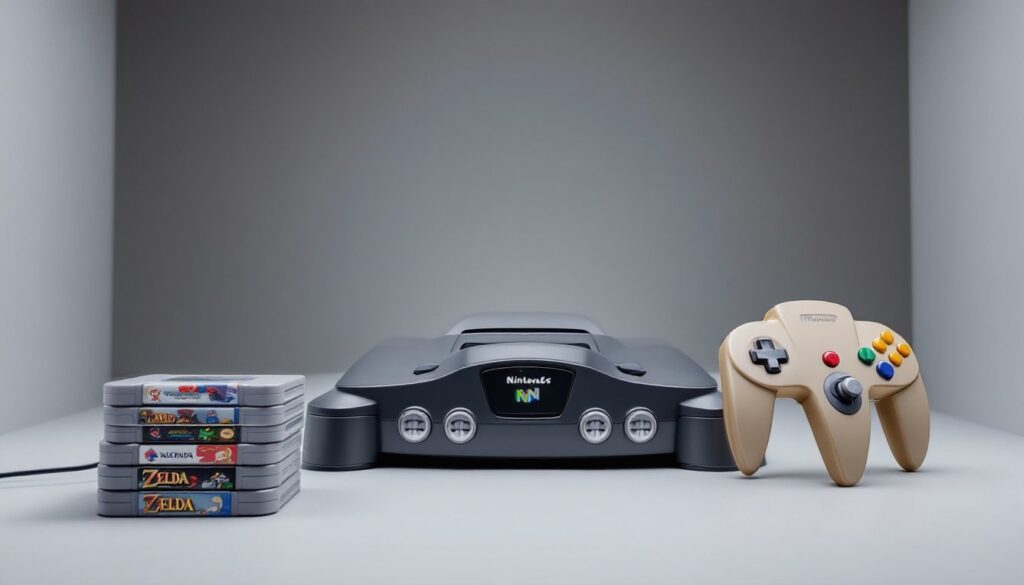
The Nintendo 64 launched on June 23, 1996, in Japan and arrived in North America in September of that year, fundamentally changing how gamers experienced video games. This cartridge-based powerhouse introduced full 3D gaming to mainstream audiences and proved Nintendo could compete in the 32-bit and 64-bit era alongside Sony and Sega. With an innovative controller, groundbreaking first-party titles, and a technical achievement that still impresses collectors and emulation enthusiasts, the N64 earned its place as one of gaming’s most influential consoles. Even today, the Nintendo 64 remains relevant, whether you’re chasing nostalgic speedruns, collecting rare cartridges, or comparing its design philosophy to modern systems like the Nintendo Switch 2.
Key Takeaways
- The Nintendo 64 launched in 1996 and revolutionized gaming by proving that cartridge-based systems could deliver full 3D experiences and compete with CD-based consoles like PlayStation.
- The N64’s three-pronged controller was revolutionary, featuring the first truly functional analog stick that became the blueprint for all modern console controllers and enabled fluid 3D movement.
- Groundbreaking N64 titles like Super Mario 64, The Legend of Zelda: Ocarina of Time, and GoldenEye 007 prioritized gameplay innovation over raw horsepower, establishing Nintendo’s game-first philosophy that persists today.
- Nintendo 64 cartridges can command significant collector value, with rare titles like Panzer’s Revenge reaching five-figure prices, while emulation and flash carts provide accessible preservation alternatives.
- The Nintendo 64’s legacy directly influenced modern Nintendo systems including the Nintendo Switch, proving that focus on innovative gameplay and fun matters more than matching competitor specifications.
The Origins and Launch of Nintendo’s Cartridge Legend
After the massive success of the Super Nintendo, Nintendo faced a critical decision: stick with cartridges or jump to the CD format like competitors. The N64 team chose cartridges, betting on faster loading times and instant gameplay. Development began in the early 1990s, with Silicon Graphics providing the CPU technology that made the 3D processing possible.
Nintendo kept the N64 concept under wraps during development, building anticipation through industry rumors and demo events. When the company finally revealed the machine and its iconic three-pronged controller at CES 1996, it shocked the gaming world. The design looked alien compared to traditional controllers, but developers immediately understood its potential for 3D analog stick control, something standard gamepads couldn’t deliver.
The launch lineup was lean but killer: Super Mario 64 and a few titles trickled out first, with Star Fox 64 and Mario Kart 64 following quickly. This strategy worked. The Nintendo 64 shifted 1.93 million units in its first year, proving that cartridges weren’t dead and that nostalgic gamers craved what Nintendo offered.
Why The N64 Defined An Era Of Console Gaming
The Nintendo 64 arrived at a pivotal moment. The industry was obsessed with polygonal graphics and pushing processing power, but most 32-bit games suffered from slow load times and awkward controls. Nintendo’s focus on gameplay over raw specs was a breath of fresh air.
Super Mario 64 proved that analog stick control and 3D perspective could work perfectly in real-time gameplay. Players could move, strafe, and rotate the camera in ways that felt intuitive and revolutionary. Other developers watched, learned, and adapted. Within months, games designed around analog control became the industry standard.
The N64 also established Nintendo as the arcade-style, fun-first company, while competitors chased photorealism. This philosophy separated Nintendo from Sony’s PlayStation, a console that outsold the N64 but relied heavily on ambitious cinematic titles. Nintendo Life has extensively covered how this generation split defined gaming preferences for decades to come. The Nintendo 64 taught the industry that gameplay innovation could matter more than horsepower.
Groundbreaking Games That Still Matter Today
Technical Specifications and Hardware Innovation
Before diving into the software, the N64’s specs deserve respect. The console ran a 93.75 MHz MIPS R4300i processor with 4 MB of RAM, a custom 3D graphics chip from Silicon Graphics, and supported cartridges up to 64 MB (though most sat between 16–32 MB). These limitations forced developers to be creative, and that constraint actually produced timeless design.
The cartridge format meant virtually zero load times between levels. Compare that to PlayStation, where extended loading screens interrupted gameplay constantly. Real-time texture filtering and fogging effects made 3D worlds feel cohesive, even at lower polygon counts than competitors.
Super Mario 64 remains the gold standard for analog stick platforming and camera control. The game sold over 40 million copies worldwide and influenced every 3D action game afterward. The Legend of Zelda: Ocarina of Time followed and became a critical masterpiece, many outlets on Metacritic still rank it among the highest-rated games ever made. GoldenEye 007 proved the N64 could deliver serious first-person shooters with split-screen multiplayer that dominated dorm rooms for years. Mario Kart 64, Donkey Kong 64, Banjo-Kazooie, and Perfect Dark filled the rest of the library with quality.
These titles set design standards. They proved gameplay came first, graphics second. Even casual gamers remember the iconic moments: collecting stars in Mario 64, solving the Water Temple in Zelda, landing headshots in GoldenEye. The Nintendo Switch carries forward this same philosophy today.
The Controller Revolution and Its Lasting Impact
That weird three-pronged controller sparked genuine controversy at launch. Gaming journalists and skeptics assumed it was an absurd design destined for the bin. They were wrong.
The center prong housed the first truly functional analog stick, a free-moving joystick that let players control 3D movement with precision. You could grab the left and center prongs for platforming or the center and right prongs for ranged aiming. The controller felt strange in hand, but once you held it for an hour, the design made sense.
The analog stick changed everything. Game developers could now design 3D games around smooth, continuous movement instead of discrete directional inputs. Camera control became fluid. Aiming in first-person games became viable on console. This single innovation accelerated console gaming’s transition to 3D so significantly that the PlayStation and even the Nintendo Switch borrowed heavily from it.
Today’s controllers still follow the N64’s blueprint: dual analog sticks, shoulder buttons for secondary actions, and a central area for face buttons. The original stick wore out notoriously fast, many collectors now own cartridges that still play perfectly but controllers that are nearly unusable. That durability issue aside, the design was genius and ahead of its time.
Nintendo 64 Collecting and Legacy in 2026
Collecting N64 cartridges has exploded since 2020. Rare games like Panzer’s Revenge and Snowboard Kids 2 command five-figure prices, while common titles like Mario Kart 64 run $50–80 in decent condition. Collectors care obsessively about label condition, cartridge authenticity, and whether controllers are original or third-party replacements.
The Nintendo 64 ROM library exists in near-perfect emulation form. Enthusiasts play via PC emulators like Project64 or on flash carts that plug into authentic hardware. Some prefer original cartridges on working consoles, there’s no shortage of those machines on the secondhand market, though yellowed plastic and failing capacitors are common.
Nintendo hasn’t released an official N64 Mini yet, though speculation continues. The Super Nintendo Mini found massive success, and the Mini strategy proved there’s appetite for official retro products. An N64 Mini would likely include Mario 64, Zelda, GoldenEye, and perhaps 8–12 other classics. Until that happens, collectors hunt vintage hardware and cartridges, or they explore emulation with ROM archives.
The Nintendo Switch has become the spiritual successor to the N64, a hybrid console that prioritizes fun over raw power, focusing on Nintendo’s franchises and controller innovation. Rumors about the Nintendo Switch 2 suggest the tradition continues. Game preservation groups also work tirelessly to document and archive N64 games, ensuring that future generations can study and play these titles. How the transition from cartridges to digital distribution affects long-term preservation remains an open question the industry is still grappling with, much like how the Nintendo DS Release Date marked another pivotal shift in Nintendo’s approach to hardware design.
Conclusion
The Nintendo 64 didn’t just launch a console, it shaped how the gaming industry approached 3D gameplay, controller design, and game design philosophy for decades. From analog stick control to the focus on local multiplayer experiences, the N64’s influence ripples through every Nintendo platform since. Whether you’re collecting original cartridges or replaying classics through emulation, the Nintendo 64 remains unmissable gaming history.