Super Mario Bros. isn’t just a video game, it’s the cornerstone of modern gaming itself. When the NES platformer launched in 1985, it single-handedly revived the industry from the brink of collapse and established design principles that define games today. Whether you’re a speedrunner dissecting frame-perfect jumps, a casual player revisiting the original, or someone curious about why Mario’s still Nintendo’s flagship character four decades later, this guide covers the history, mechanics, and cultural weight behind gaming’s most influential franchise. The game sold over 40 million copies and redefined what platformers could be.
Key Takeaways
- Super Mario Bros. single-handedly revived the video game industry from collapse in 1985 by combining mechanical excellence with strict quality control that restored consumer trust.
- The game’s level design philosophy—featuring eight worlds with hidden warp zones and rewarding exploration—established the template that platformers still follow today.
- Core mechanics of running, jumping, and timing, paired with diverse enemies requiring different strategies, created accessibility for casual players while offering depth for speedrunners and veterans.
- Koji Kondo’s iconic soundtrack and sound design became shorthand for the entire platforming genre, with melodies that remain instantly recognizable across four decades.
- Super Mario Bros. transcended gaming to become a cultural phenomenon, with Mario appearing in comics, cartoons, merchandise, and theme parks in ways no other video game character has achieved.
- Modern iterations—from Super Mario 64’s 3D exploration to Mario Odyssey’s possession mechanics and Super Mario Bros. Wonder’s genre-bending creativity—prove the franchise’s ability to evolve while maintaining timeless design principles.
History and Evolution of Super Mario
The Original Game and Its Story
Mario’s journey started before Super Mario Bros. existed. He debuted in 1981 as “Jumpman” in the arcade game Donkey Kong, originally framed as a carpenter trying to rescue his girlfriend from a rampaging ape. By 1983, the arcade sequel Mario Bros. established the character as a plumber, a quirk that stuck and became central to the franchise identity.
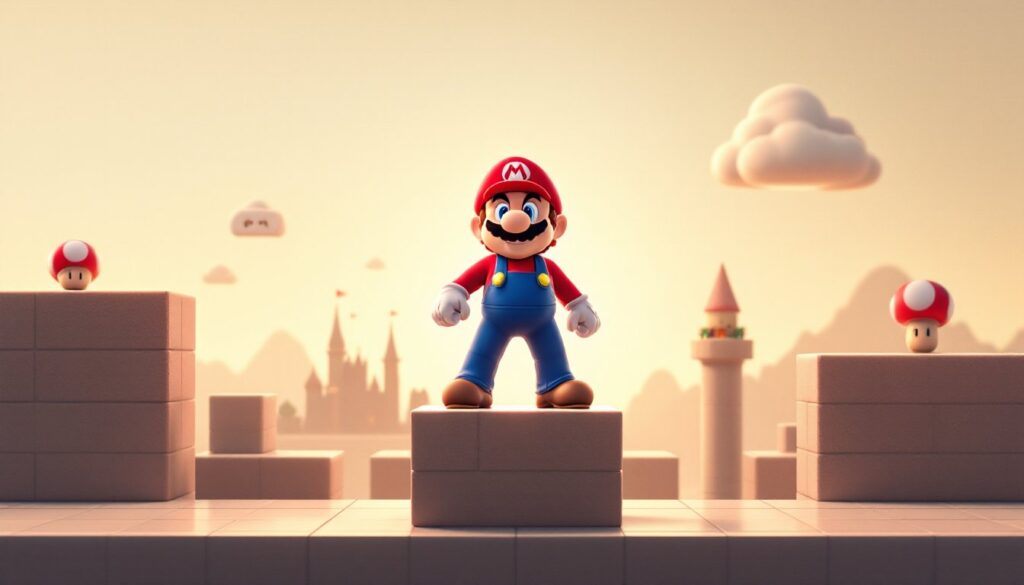
Super Mario Bros. arrived in September 1985 for the Famicom (later the NES globally), and it changed everything. The plot is deliberately simple: Mario travels through the Mushroom Kingdom to rescue Princess Toadstool from King Koopa, later known as Bowser. This straightforward premise gave players a goal without getting in the way of gameplay. The side-scrolling formula introduced here became the template for platformers across all platforms.
The game’s structure broke new ground. Eight worlds, each with four stages offering different environments, overworld, underground, water, and castle, created variety without bloating development. Hidden warp zones in stages like World 1-2 and 4-2 rewarded exploration, a design philosophy that influenced Super Mario World and countless games after it.
Core Gameplay Mechanics and Power-Ups
Level Design, Enemies, and Warp Zones
Super Mario Bros. stripped platforming down to essentials: running, jumping, and timing. Mario starts small but can grow by hitting the Super Mushroom, allowing him to break certain blocks and survive one hit from enemies. The Fire Flower lets him throw fireballs, essential for taking down airborne threats and bosses. The Starman grants temporary invincibility, a brief window of dominance before the power fades.
Enemies demanded different strategies. Goombas are slow walkers, easy to jump on but deadly if Mario lands on them from the side. Koopa Troopas move faster and, when defeated, leave behind shells that can be kicked as projectiles. Piranha Plants snap at Mario from pipes: timing your jumps or using fireballs is mandatory. Cheep-Cheeps leap through water stages, Bullet Bills fire from cannons, and Bowser appears in every castle with fire-breathing attacks and patterns that reward pattern recognition.
The flagpole at the end of each stage serves as the victory condition, but this isn’t arbitrary. Jumping higher on the pole gives bonus points, a small incentive that encourages skilled play. The time limit (300 seconds per stage) creates pressure without feeling unfair: experienced players beat stages in under a minute, while new players have breathing room. Coin collection is straightforward: 100 coins net an extra life, and coins are scattered throughout levels and inside blocks, encouraging thorough exploration. Warp Zones appear in hidden rooms, letting skilled players skip entire worlds and reach the endgame faster, a speedrunning staple that’s been recreated in hundreds of games since.
Music, Sound Design, and Cultural Impact
Koji Kondo’s score remains the most recognizable video game music ever composed. The overworld theme is instantly identifiable across generations, while underground, water, and castle themes shift tone without losing the core melody. The jump sound, a distinctive chirp, became shorthand for platforming itself. Coin chimes, power-up jingles, and the Bowser boss theme each have personality: the game never felt generic because Kondo understood how melody and rhythm could guide emotion.
Culturally, Super Mario Bros. accomplished what no game had before or since. The video game crash of 1983 devastated the industry, retailers and consumers lost faith after oversaturation and poor software flooded the market. Nintendo’s strict licensing and quality control, paired with Super Mario Bros.’ mechanical excellence and polish, restored trust. The game proved games could be an art form and a sustainable business simultaneously.
Mario became Nintendo’s mascot, displacing Donkey Kong himself. Within years, Mario appeared in sports games, RPGs, kart racers like Mario Kart, fighting games like Super Smash Bros, and spin-offs that spawned their own franchises. The character transcended gaming, Mario appeared in comics, cartoons, merchandise, and theme parks. No other video game character has achieved such cultural penetration. Reports on platforms like Siliconera regularly track Mario’s influence across media, a testament to the franchise’s enduring grip on pop culture.
Modern Super Mario: Remakes and Latest Releases
The original Super Mario Bros. has been ported across nearly every Nintendo console. It appeared on the Famicom Disk System, Game Boy Color (bundled in Super Mario Bros. Deluxe), Virtual Console on Wii, Wii U, and 3DS, NES Classic Edition, and Nintendo Switch Online. Each version preserved the core experience while occasionally offering enhancements, Game Boy Color added color, while Switch Online provides save states for accessibility.
Modern mainline Mario games evolved the formula. Super Mario Bros. 3 (1990) introduced new power-ups and more complex level design. Super Mario World (1990) launched the SNES and refined the cape mechanics. Super Mario 64 (1996) pioneered 3D platforming with analog stick control and free-form exploration. Super Mario Galaxy (2007) experimented with gravity mechanics on spherical worlds. Super Mario Odyssey (2017) introduced possession mechanics, letting Mario control enemies and objects to solve puzzles. Most recently, Super Mario Bros. Wonder (2023) brought explosive creativity, elephant transformations, swimming through the air, and levels that warp and shift mid-stage.
Super Mario Maker (2015) and its sequel (2019) let players design custom levels and share them online, crowdsourcing endless content. This tool democratized level design and proved the community could maintain interest for years. The New Super Mario Bros. series (starting 2006 on DS) brought 2D design back while incorporating modern graphics and physics, hitting over 30 million copies sold across all entries. Whether you prefer tight 2D design, sprawling 3D exploration, or creative customization tools, the modern Mario lineup offers something for every taste.
Conclusion
Super Mario Bros. established the template that platformers still follow. Its balance of accessibility for newcomers and hidden depths for veterans created a game that worked across skill levels. The precise controls, enemy variety, level progression, and iconic music combined into something timeless. Four decades later, the franchise remains commercially dominant and culturally relevant, no small feat in an industry obsessed with novelty. Whether through ports, remakes, or entirely new adventures, Mario continues to define what great game design looks like.