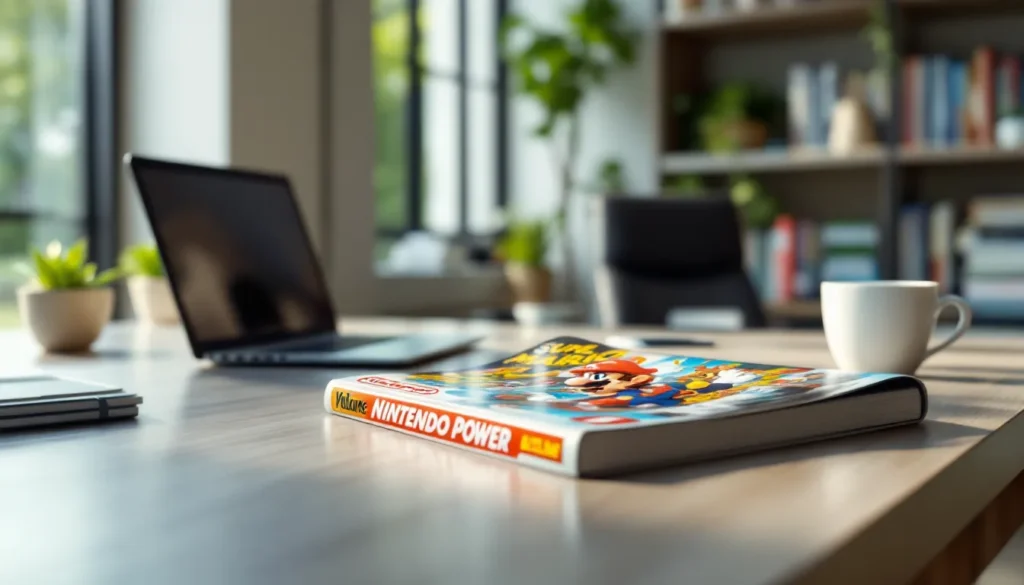
If you grew up in the late ’80s or ’90s, chances are you spent hours flipping through the glossy pages of a certain magazine, absorbing every pixel of game art, every strategy tip, and every tantalizing preview. Nintendo Power wasn’t just another gaming magazine, it was a cultural phenomenon that defined how a generation experienced Nintendo’s library. For 24 years, it served as the bridge between Nintendo and its fans, delivering exclusive content, jaw-dropping cover art, and strategies that turned impossible boss fights into conquerable challenges. Even though the final issue shipped in 2012, its influence echoes through modern gaming media, collector circles, and the nostalgic hearts of gamers worldwide.
Key Takeaways
- Nintendo Power served as the official Nintendo magazine for 24 years (1988–2012), fundamentally shaping how a generation of gamers experienced Nintendo’s library with exclusive strategy guides, previews, and community engagement.
- The magazine pioneered a dual-purpose model that went beyond marketing by providing comprehensive walkthroughs, hosting the Player’s Pulse reader submission section, and operating the Game Counselor hotline for real-time player support.
- Nintendo Power’s golden era peaked around 1990 with roughly 2 million subscribers, becoming legendary for iconic cover art and landmark game reveals like StarFox and Super Metroid that drove pre-release hype.
- The magazine’s high-quality art direction, developer access, and exhaustive strategy guides—especially for games like The Legend of Zelda and Super Metroid—made it an indispensable resource before online walkthroughs existed.
- Early decline began in the mid-2000s as the internet disrupted print media, and Nintendo outsourced publication in 2007, though the final issue in December 2012 served as a heartfelt farewell to longtime readers.
- Nintendo Power’s legacy lives on through modern gaming journalism, collector value (with early issues selling for $50–$150+), and preservation communities that keep the magazine’s spirit of quality coverage and player service alive today.
What Was Nintendo Power?
Nintendo Power was the official magazine published by Nintendo of America, running from July/August 1988 to December 2012. It delivered game reviews, previews, strategy guides, and insider news directly to subscribers’ mailboxes every month. Unlike third-party publications, Nintendo Power had direct access to Nintendo’s development teams, allowing it to showcase games before anyone else and provide authoritative walkthroughs straight from the source.
The magazine wasn’t just a promotional vehicle, it became the definitive resource for Nintendo fans who wanted to master their favorite games, discover hidden secrets, and stay ahead of the curve on upcoming releases.
The Birth of Nintendo Power in 1988
Nintendo Power launched in July 1988, with Volume 1 featuring Super Mario Bros. 2 on the cover. Nintendo of America had previously operated the Nintendo Fun Club, a newsletter that reached around 3.4 million members by 1988. Recognizing the hunger for deeper content, Nintendo transformed the Fun Club into a full-fledged magazine.
The timing was perfect. The NES was dominating living rooms, and gamers desperately needed help navigating complex titles like The Legend of Zelda and Metroid. Nintendo Power stepped in to fill that gap with detailed maps, enemy stats, and item locations that turned frustration into triumph.
Mission and Purpose: More Than Just a Marketing Tool
While Nintendo Power was undeniably a marketing asset, it served a dual purpose that elevated it beyond simple advertising. The magazine aimed to enhance the player experience by providing comprehensive guides, fostering community through reader submissions, and maintaining enthusiasm for Nintendo’s ecosystem.
Each issue featured the Player’s Pulse section (later Pulse), where readers submitted high scores, fan art, and letters. This created a sense of belonging, gamers weren’t just consumers: they were part of a nationwide club. The magazine also operated the Game Counselor hotline, where players could call for live help on tough sections, further cementing Nintendo’s commitment to player support.
The Golden Era: Nintendo Power’s Peak Years
The early-to-mid ’90s represented Nintendo Power’s apex. Circulation peaked at roughly 2 million subscribers around 1990, making it one of the most widely read gaming publications in North America. During this period, the magazine became synonymous with Nintendo fandom itself.
Iconic Cover Stories and Game Reveals
Nintendo Power’s covers are legendary. Issue #1’s Super Mario Bros. 2 set the standard, but subsequent covers became collectible art pieces. The magazine revealed Super Mario World (Vol. 28), The Legend of Zelda: A Link to the Past (Vol. 32), and Super Metroid (Vol. 60) with stunning artwork and exclusive screenshots that drove pre-release hype to fever pitch.
One of the most memorable moments came with StarFox (Vol. 45, February 1993), which showcased the Super FX chip’s 3D capabilities in mind-blowing detail. The magazine didn’t just report on games, it made events out of their launches. Fans who read about fascinating Nintendo company history understand how deeply the magazine intertwined with the brand’s identity during this era.
The Player’s Pulse and Community Connection
The Player’s Pulse (originally Pulse) section was the heartbeat of community engagement. Readers sent in high scores for verification, shared strategies, submitted fan art, and asked questions. Seeing your name in print was a badge of honor, it meant you’d achieved something worth recognizing on a national scale.
The section also featured Counselors’ Corner, where Nintendo’s game counselors answered the toughest reader questions. This two-way conversation made subscribers feel heard and valued, transforming the magazine from a monologue into a dialogue.
Strategy Guides That Changed Gaming Forever
Before YouTube walkthroughs and GameFAQs, there was Nintendo Power. The magazine’s strategy guides were exhaustive, featuring full-color maps, enemy weaknesses, hidden item locations, and boss strategies that were impossible to find elsewhere.
The Legend of Zelda maps in early issues became the stuff of legend, players could finally navigate the dungeons without wandering aimlessly. Super Metroid’s item progression guide (Vol. 60) helped players achieve 100% completion, while Final Fantasy III (Vol. 51) received a massive multi-issue walkthrough that saved countless hours of grinding and guesswork.
These guides weren’t just helpful, they were definitive. Because Nintendo Power had direct access to developers, the information was accurate and often included tips the developers themselves recommended.
What Made Nintendo Power Special?
Several factors elevated Nintendo Power above competing publications. It wasn’t just access or exclusivity, the magazine demonstrated a level of craft and care that made each issue feel premium.
High-Quality Art and Design
Nintendo Power’s art direction set it apart. The magazine employed talented illustrators who created original cover art that often surpassed the games’ own promotional materials. Artists like Katsuya Terada contributed stunning painted covers that became iconic in their own right.
Inside, the layout was clean and colorful, with screenshots presented in vibrant detail. The magazine used spot illustrations, character art, and creative typography that made every page visually engaging. This wasn’t a text-heavy manual, it was a visual feast that respected readers’ time and attention.
Exclusive Content and Developer Access
Being the official Nintendo publication meant Nintendo Power could go where others couldn’t. The magazine regularly featured developer interviews, behind-the-scenes looks at game creation, and exclusive previews months before release. Publications like Siliconera and Gematsu carry on this tradition today by covering Japanese game announcements and developer insights, but Nintendo Power pioneered the model in print.
For major releases, Nintendo Power sometimes included insert posters featuring game art, maps, or character galleries. Subscribers also received exclusive offers, including discounts on Nintendo merchandise and early access to certain products.
The Counselor Connection and Reader Engagement
The Nintendo Game Counselor service was a differentiator that few other publishers could match. Subscribers (and even non-subscribers) could call a toll-free number and speak with trained counselors who had extensive knowledge of Nintendo’s game library. These counselors had access to internal strategy guides and could walk players through difficult sections in real time.
This service reinforced the magazine’s mission: helping players enjoy their games to the fullest. Combined with the reader submissions and high-score leaderboards, it created a genuine sense of community that extended beyond the printed page.
The Decline and Final Issue
All good things come to an end, and Nintendo Power was no exception. By the late 2000s, the magazine faced mounting challenges that eventually led to its closure.
Changing Media Landscape and Competition
The rise of the internet fundamentally changed how gamers consumed information. By the mid-2000s, websites offered instant news, video walkthroughs, and community forums that updated in real time. Waiting a month for a magazine felt increasingly outdated when IGN, GameSpot, and fan wikis provided the same information, often faster and for free.
In 2007, Nintendo outsourced publication to Future US, reducing direct involvement. While Future maintained quality, the magazine lost some of its insider mystique. Circulation dropped steadily as younger gamers gravitated toward digital media, and advertising revenue declined in tandem.
The Wii era brought challenges too. While the console was a commercial success, its casual-focused library didn’t generate the same hardcore enthusiasm that drove magazine subscriptions. Core Nintendo fans wanted deep dives into games like Metroid Prime and The Legend of Zelda: Twilight Princess, but much of the Wii’s lineup skewed toward accessible, pick-up-and-play experiences that didn’t require extensive guides.
The Emotional Goodbye in 2012
On August 21, 2012, Nintendo announced that Issue 285 (December 2012) would be the final edition. The announcement hit hard for longtime subscribers who’d grown up with the magazine.
The final issue was a love letter to fans. It featured retrospectives, staff reflections, and tributes to 24 years of Nintendo history. The cover showcased Mario, Link, Samus, Kirby, Donkey Kong, and Pikachu in a group shot that celebrated Nintendo’s greatest heroes. Inside, the editorial team thanked readers for their loyalty and acknowledged the magazine’s role in shaping gaming culture.
For many, it marked the end of an era, not just for the magazine, but for a particular style of gaming media that prioritized depth, curation, and community over speed and clickbait.
Nintendo Power’s Lasting Legacy in Gaming Culture
Even though Nintendo Power ceased publication over a decade ago, its influence remains visible across gaming media and culture.
Influence on Modern Gaming Media
Many of today’s gaming journalists, YouTubers, and content creators cite Nintendo Power as an early inspiration. The magazine’s blend of authoritative information, community engagement, and high production values set a template that modern outlets still follow.
Sites like Nintendo Life continue the tradition of deep Nintendo coverage with reviews, guides, and eShop recommendations. The emphasis on helping players get the most from their games, rather than just reporting news, echoes Nintendo Power’s original mission. For those interested in enhancing their Nintendo experience, the spirit of exploration and mastery that Nintendo Power championed lives on.
The magazine also demonstrated that gaming content could be more than disposable entertainment coverage, it could be collectible, artistic, and meaningful.
Collector’s Value and Nostalgia Market
Physical issues of Nintendo Power have become hot commodities among collectors. Early volumes, especially Issue #1 featuring Super Mario Bros. 2, can fetch $50-$150+ depending on condition. Issues with poster inserts intact, or those featuring landmark games like EarthBound (Vol. 63) or Chrono Trigger (Vol. 76), command premium prices.
Complete runs of all 285 issues are rare and valuable, often selling for $2,000-$5,000 when in good condition. The nostalgia market has grown as millennials who grew up with the magazine now have disposable income and a desire to recapture childhood memories.
Beyond monetary value, these issues represent tangible pieces of gaming history. They document the evolution of Nintendo’s platforms, design philosophies, and cultural impact in a way that digital archives can’t quite replicate.
How to Experience Nintendo Power Today
For gamers who want to explore Nintendo Power’s legacy, whether for nostalgia, research, or pure enjoyment, several options exist.
Digital Archives and Preservation Efforts
While Nintendo hasn’t officially released complete digital archives, preservation communities have worked to scan and catalog issues for historical purposes. Some issues are available through archive sites, though legality varies by jurisdiction and intended use.
Retro gaming communities on Reddit, Discord, and specialized forums often share memories, scans, and discussions about specific issues and articles. These communities keep the magazine’s spirit alive through shared appreciation and knowledge exchange.
Podcasts like Retronauts and YouTube channels dedicated to gaming history occasionally feature deep dives into specific Nintendo Power issues, offering modern commentary on classic content.
Collecting Physical Issues: Tips for Enthusiasts
If you’re interested in collecting physical issues, here are practical tips:
Where to Buy:
- eBay remains the primary marketplace, with thousands of listings at any given time.
- Local game stores and comic shops sometimes carry back issues in their vintage sections.
- Retro gaming conventions often feature vendors specializing in old gaming magazines.
- Facebook Marketplace and Craigslist can yield unexpected finds, especially complete collections from people clearing out storage.
What to Look For:
- Condition matters: Issues with intact spines, minimal yellowing, and included inserts (posters, cards) command higher prices.
- First printings of milestone issues (Vol. 1, Vol. 100, final issue) are most desirable.
- Complete years or themed runs (all SNES era, all N64 era) can be more valuable than random issues.
Price Expectations:
- Common issues from the late ’90s and 2000s: $5-$15
- Early NES-era issues (1988-1991): $20-$50
- Landmark issues (Vol. 1, rare games): $50-$150+
- Complete runs: $2,000-$5,000 depending on condition
Storage Tips:
- Store in magazine backing boards and archival bags to prevent yellowing and spine damage.
- Keep in a climate-controlled environment, heat and humidity are enemies of paper preservation.
- Avoid direct sunlight, which fades covers and accelerates deterioration.
Conclusion
Nintendo Power was more than a magazine, it was a companion that turned solitary gaming sessions into shared cultural experiences. For 24 years and 285 issues, it delivered strategies that conquered impossible levels, previews that built anticipation, and community features that connected players across the country. Its combination of exclusive access, stunning art, and genuine player service created a model that modern gaming media still aspires to match. Whether you’re hunting down physical issues for your collection or simply reminiscing about the days of waiting by the mailbox, Nintendo Power’s legacy endures as a testament to the power of dedicated, quality gaming journalism.