The Nintendo Switch Lite has carved out its own niche since 2019 as the go-to option for gamers who want portability without compromise. If you’re deciding whether this handheld-only device is right for you, or you’re just curious about how it stacks up against the standard Nintendo Switch and OLED models, this guide covers everything you need to know. We’ll break down specs, compare it head-to-head with other Switch variants, and help you figure out whether the Lite deserves a spot in your gaming setup. Whether you’re a casual player or someone who values gaming on the go, understanding the Nintendo Switch Lite’s strengths and limitations is key to making an informed purchase.
Key Takeaways
- The Nintendo Switch Lite is a handheld-only console designed for portable gaming, priced at $229.99—the most affordable Switch option for gamers who don’t need TV docking.
- While the Switch Lite plays the vast majority of Nintendo Switch titles in handheld mode, it lacks TV connectivity, detachable Joy-Con controls, and a built-in kickstand compared to standard and OLED models.
- Battery life ranges from 3–7 hours depending on game intensity, and integrated controls mean the entire unit requires servicing if Joy-Con drift occurs, unlike replaceable controllers on other models.
- The Switch Lite excels for casual players prioritizing portability and compact design, but should be skipped if you want flexibility for TV gaming or need motion-control features that require separate Joy-Con.
- A microSD card purchase is essential for the Switch Lite’s 32 GB storage, as internal capacity fills quickly when downloading multiple games to the handheld console.
What Is The Nintendo Switch Lite?
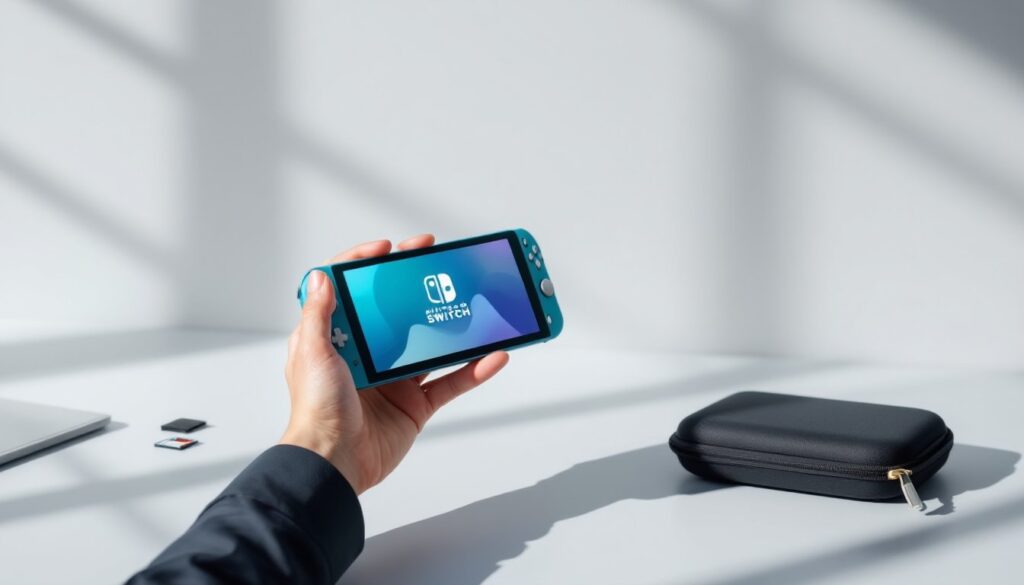
The Nintendo Switch Lite is a dedicated handheld console released in 2019. Unlike the standard Nintendo Switch, which can dock to a TV and features detachable controllers, the Lite is purpose-built for portable gaming. It plays Nintendo Switch games that support handheld mode, which is the vast majority of the Switch library, without any TV connectivity or docking capability.
Think of it as Nintendo’s answer to gamers who don’t care about plugging into a TV. It’s lighter, more compact, and comes at a lower price point than other Switch models. The integrated controls mean you’re always ready to play straight out of the box: there’s no attaching or detaching Joy-Con controllers.
Key Features & Specifications
Display, Performance & Design
The Switch Lite packs a 5.5-inch capacitive touch LCD screen with a 1280×720 resolution. It’s sharp enough for handheld gaming and feels responsive when you’re navigating menus or playing touch-enabled titles. The whole unit weighs significantly less than the standard Switch, making it genuinely portable, you can toss it in a bag without thinking twice.
Storage comes in at 32 GB internal, with a microSD card slot supporting cards up to 2 TB (though 1 TB cards are more commonly used). You’ll definitely want to grab a microSD card if you plan to download more than a handful of games: the internal storage fills up fast.
The controls are fully integrated, no removing Joy-Con controllers here. The left side features a traditional D-pad instead of the four directional buttons found on standard Switch Joy-Con. This D-pad is a practical win for classic-style games like Celeste or Hollow Knight. Battery life ranges from roughly 3 to 7 hours depending on the game and power settings. Intensive titles like Zelda: Tears of the Kingdom will drain the battery faster than lighter experiences like Animal Crossing.
Color options include Blue, Yellow, Gray, Turquoise, and Coral. The MSRP is $229.99 USD, though street prices vary by retailer. The compact design prioritizes comfort for extended handheld sessions, with rounded edges and a lightweight frame that won’t fatigue your hands.
Nintendo Switch Lite vs. Standard Switch & OLED Model
Here’s the breakdown:
Nintendo Switch Lite:
- 5.5″ LCD screen
- Handheld-only (no TV, no dock)
- Integrated, non-removable controls
- No kickstand
- $229.99 MSRP
Standard Nintendo Switch:
- 6.2″ LCD screen
- TV mode via dock
- Detachable Joy-Con controllers
- Built-in kickstand
- Better battery life than Lite
- ~$299 MSRP
Nintendo Switch OLED Model:
- 7″ OLED screen (vivid colors, true blacks)
- TV mode via dock
- Detachable Joy-Con controllers
- Enhanced kickstand
- 64 GB storage (vs. Lite’s 32 GB)
- Best battery life of all three
- ~$349 MSRP
The key trade-off: you’re sacrificing TV connectivity and controller flexibility for lower cost and enhanced portability with the Lite. If TV gaming matters to you at all, the standard Switch or OLED model is the better call. But if you’re committed to handheld-only gaming, the Lite’s compact form factor and lower price are genuine advantages. A detailed Switch Lite comparison guide breaks down these differences in depth if you need more specifics.
Game Library & Compatibility
The Switch Lite plays the vast majority of the Nintendo Switch library, anything that supports handheld mode works flawlessly. That includes indie darlings like Stardew Valley, Hades, and Hollow Knight, plus big Nintendo exclusives like Mario Kart 8, Animal Crossing: New Horizons, and the Legend of Zelda titles.
Online multiplayer games like Fortnite and Splatoon 3 run perfectly on the Lite with a Nintendo Switch Online subscription. But, some titles have quirks. Games relying heavily on motion controls or IR features, like Ring Fit Adventure or 1-2-Switch, become impractical without separate Joy-Con controllers (which you’d need to buy also). Nintendo Labo kits are effectively incompatible due to their reliance on the original Switch’s modular design.
For practical purposes, if you’re planning to play mainstream Switch games, you’ll be fine. The library is massive and growing. Just check the eShop or a comprehensive Switch Lite guide if you’re concerned about a specific title’s compatibility.
Battery Life & Durability
Battery life is a real consideration. The Lite gives you roughly 3–7 hours depending on what you’re playing and power settings. Darker, less intensive games stretch closer to 7 hours: demanding AAA titles drain it much faster. Enabling battery saver mode helps, but it’s a quality-of-life hit if you’re playing something like Elden Ring.
Durability is where the integrated controls become a liability. Joy-Con drift, that frustrating issue where analog sticks register false input, is a known problem across all Switch models. On the Lite, you can’t just swap out a controller: the whole unit needs servicing. If drift happens (and Nintendo has acknowledged it as a widespread issue), you’re looking at repair costs or replacement hassles. This is worth factoring into your long-term ownership outlook.
The device itself is robust enough for casual handling, but the integrated design means a single failure point affects everything. Understanding Nintendo Switch maintenance can help you prepare for potential repairs down the road.
Is The Nintendo Switch Lite Worth Buying?
The Lite is worth buying if:
- You exclusively game in handheld mode and have zero interest in TV play
- You want the most affordable entry point into the Switch ecosystem
- Portability is your top priority and you value a lighter, more compact device
- You’re comfortable with integrated controls and understand the drift repair implications
- You play mostly mainstream Switch titles that support handheld mode
Skip the Lite if:
- You want flexibility to dock and play on a TV sometimes
- You need detachable Joy-Con for motion-heavy or multiplayer tabletop experiences
- You’re concerned about long-term durability of integrated controls
- You want the best possible screen quality (the OLED model beats it here)
For most casual gamers who value portability and are okay with handheld-only gaming, the Switch Lite is a solid choice. It’s not the “best” Switch, that crown goes to the OLED model if budget allows, but it’s the best for handheld gaming specifically. Maximizing your Nintendo Switch storage is one area where all Switch models share the same consideration: get a microSD card. The Lite’s 32 GB feels tight once you download more than a few games. If you’re looking at used options, pricing varies significantly depending on condition and bundle inclusions, but a used Lite typically undercuts the $229.99 MSRP. Understanding Nintendo’s handheld evolution also provides context for where the Lite fits in the company’s portable gaming legacy.