
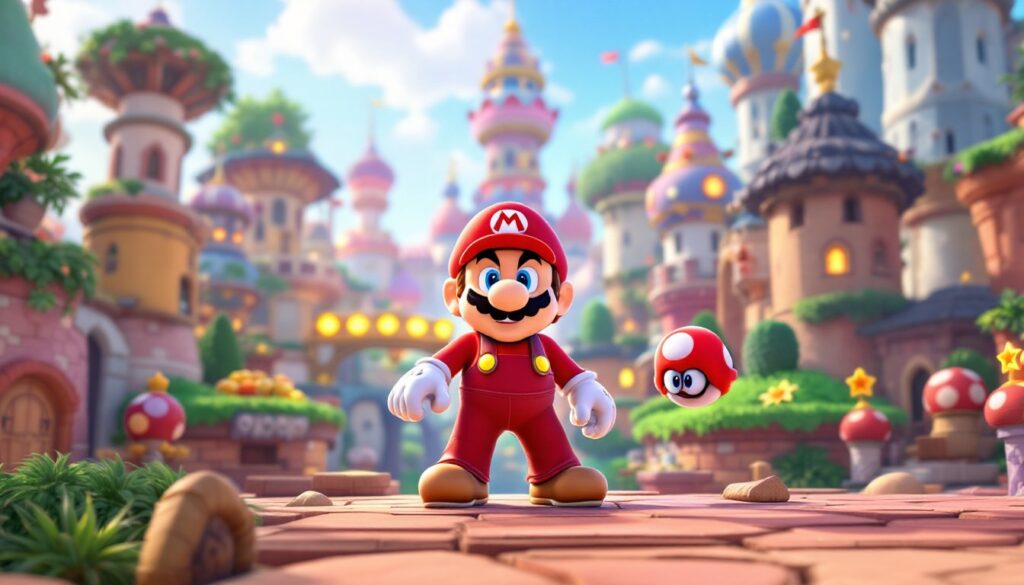
Super Mario Odyssey redefined 3D platforming when it launched on Nintendo Switch, and nearly a decade later, it remains the gold standard for creative level design and innovative mechanics. The core mechanic, Cappy, Mario’s sentient hat that lets you possess enemies and objects, transforms how you approach each challenge. Whether you’re a casual player trying to beat the final boss or a completionist hunting down all 880 Power Moons, this guide covers everything you need to dominate every kingdom. We’ll break down possession strategy, walk you through each major region, and show you how to find those hidden collectibles that separate casuals from true pros.
Key Takeaways
- Super Mario Odyssey’s Cappy possession mechanic fundamentally transforms how you approach puzzles, combat, and exploration by letting you control over 50 unique enemies and objects with distinct abilities.
- Effective possession strategy requires understanding enemy matchups and timing your throws correctly—grab Bullet Bills for tankier foes, Goombas for mobility, and rotate captures mid-battle for advanced play.
- The kingdom structure rewards multiple visits and systematic exploration, with Power Moons unlocking at different story points and hidden in breakable walls, environmental puzzles, and behind specific possession sequences.
- Players should prioritize story moons first to learn layout, then tackle found moons, racing challenges, and photo challenges before attempting frame-perfect platforming and secret moons.
- Mastering Super Mario Odyssey’s possession mechanics and completing challenges develops sharper platforming reflexes and deeper puzzle intuition that transfer to other precision-demanding games.
What Makes Super Mario Odyssey A Game-Changer
Super Mario Odyssey isn’t just another 3D platformer, it fundamentally changes how Mario interacts with his world. The possession mechanic via Cappy allows you to control over 50 different enemies and objects with their own unique abilities. A Goomba gives you two small jumps: a Bullet Bill lets you fly: a Piranha Plant opens locked doors. This design philosophy means puzzles, combat, and traversal aren’t locked behind Mario’s default moveset, they adapt to what you capture.
Compare this to traditional Mario games or even Super Smash Bros Ultimate where Mario’s kit is fixed. In Odyssey, the environment itself teaches you what to possess through visual design cues. The game respects player intelligence by rarely spelling out solutions directly, instead trusting you to experiment.
The kingdom structure also differs from linear progression. Each major region contains hundreds of Power Moons scattered across varied difficulty tiers. You might grab 50 easy ones just by exploring, then hit a wall where the remaining moons demand specific possession combos or frame-perfect platforming. This tiered approach means players of any skill level can make meaningful progress without feeling locked out.
Mastering Cappy: Possession Mechanics and Strategy
Cappy works differently than you might initially think. You’re not just switching bodies, you’re gaining access to that creature’s signature ability. Press Y/X to throw Cappy, then press the button again to take control. While possessing, you lose access to Mario’s standard moves, so positioning your throw matters.
How to Use Possession Effectively in Combat
In combat scenarios, possession isn’t about mashing buttons, it’s about matchups. Against a group of Goombas, possess one to stomp the others. Against Koopa Troopas, a Goomba won’t cut it: you need the Koopa’s shell to break through. The game presents enemies in logical combinations that telegraph what you should capture.
Advanced players rotate possessions mid-battle. Grab a Bullet Bill to damage tankier enemies, then jump out and capture a Goomba for mobility. Each creature has a specific TTK (time to kill) against different enemy types, and optimizing this matters on higher difficulty challenges like the Darker Side variant bosses.
Timing your possession throw is critical. Throw Cappy too late and you’ll eat damage: throw too early and you’ll miss. The window varies by enemy type, Bullet Bills have a generous window, but Shy Guys require precision. Practice recognizing the rhythm for each enemy type, and you’ll stop wasting Cappy energy on whiffed throws.
Kingdom Walkthroughs: Tips for Each Major Region
Each kingdom in Super Mario Odyssey presents distinct challenges and vibes. The Mushroom Kingdom feels like home base, straightforward platforming with light puzzle elements. Luncheon Kingdom throws lava mechanics at you, forcing careful possession choices around fire-resistant enemies. Shiveria demands ice platforming and Cappy freezing tech.
The critical error most players make is rushing through regions to grab the obvious Power Moons, then abandoning them. Each kingdom respects multiple visits. You’ll unlock new Power Moon challenges after beating the local boss, and some secrets only become accessible once you’ve progressed the story.
Focus on story moons first to understand the region’s layout. Then sweep for challenge moons, these typically require either platforming skill or clever possession chains. Finally, hunt the secret moons, which often hide in breakable walls or behind multi-step environmental puzzles that seem impossible until you realize which enemy to capture.
Essential Tips for Completing All Challenges
Power Moon challenges span multiple difficulty brackets. Some are “found” moons (just sitting in the open), others are “challenge” moons (compete in a race, solve a puzzle), and the brutal ones demand frame-perfect execution. Progression-wise, grab found moons liberally, they’re free points that pad your total without frustration.
Challenge moons follow patterns. Racing challenges reward tight controls and route knowledge. Platforming challenges test your possession tech and jump spacing. Photo moons ask you to capture specific angles of landmarks, these are chill but tedious. Tackle them in order of difficulty: found → racing → photo → platforming → secret.
Finding All Power Moons and Collectibles
There are 880 Power Moons across all kingdoms, and finding them all demands systematic exploration. Use the Odyssey’s hint system, NPCs hint at nearby moons, and their hints grow more specific as you earn moons in that region. Don’t dismiss hint NPCs as filler: they’re actually valuable intel delivered through flavor dialogue.
Power Moons unlock at different story points. Some regions hide moons behind boss defeats: others require you to reach minimum moon thresholds before new challenges activate. The endgame content, particularly the post-game kingdoms, expects you to have mastered possession mechanics and platforming timing.
When hunting collectibles, carry the power moon tracker, yes, the in-game one actually helps. Regions show your progress percentage, which helps identify gaps. If you’re at 78% in a kingdom, you’re missing roughly 20 moons: that number narrows your search significantly. Areas with lower completion typically hide moons in less obvious spots: breakable walls, inside possessed enemies, or locked behind specific possession sequences.
A comprehensive guide hub for Super Mario Odyssey can accelerate your hunt for specific categories. Similarly, a deep guide page provides structured progressions for players stuck on particular challenges. Cross-referencing these with your own exploration ensures you don’t miss region-specific tricks.
The collectible grind isn’t mandatory for story completion, but it teaches you each kingdom’s quirks. Players who commit to full moon collection develop sharper platforming reflexes and deeper possession intuition, skills that carry into challenges like Mario & Luigi RPGs, which demand similar precision in different contexts.
Conclusion
Super Mario Odyssey remains essential gaming because it respects player skill while maintaining broad accessibility. Master Cappy, learn each kingdom’s layout, and systematically hunt moons, and you’ll unlock everything the game offers. Whether you’re exploring casually or pushing for completion, the journey rewards experimentation. Start with story progression, graduate to challenge moons, then tackle the secrets. The game opens up the more you play.